
"As an Amazon Associate, I earn from qualifying purchases. This helps support this site at no extra cost to you."
Yes, you can season the water when boiling chicken for shredding. Salt is the most useful starting point because it seasons the surface and cooking liquid, while aromatics such as onion, garlic, peppercorns, herbs, or bay leaves can add a mild background flavor.
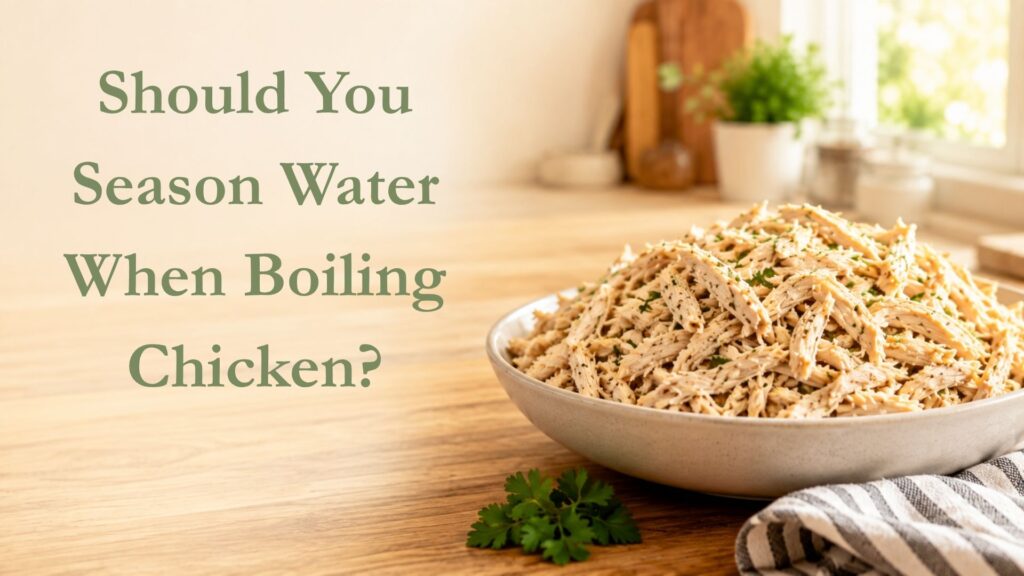
Seasoning should support the final dish rather than dominate it. Chicken intended for tacos may benefit from a different seasoning profile than chicken destined for salad, soup, or several meal-prep dishes.
The seasoning step fits naturally into boiling chicken for shredding, but heat control, doneness, and moisture retention still have a much larger effect on shred texture than the spices added to the pot.
What Seasoning the Water Actually Does
Chicken muscle contains tightly arranged fiber bundles. While the meat cooks, heat tightens the proteins and pushes some moisture outward. Seasoned liquid surrounds the chicken during this process and contributes flavor mainly around the surface and through the cooking juices.
The effect is usually subtle rather than deeply concentrated. If the finished shredded chicken will receive a sauce or strongly flavored seasoning later, keeping the boiling liquid relatively neutral can make the batch more flexible.
Useful Seasonings for Boiling Chicken
| Seasoning | What it contributes | Best fit | Trade-off |
|---|---|---|---|
| Salt | Basic savory seasoning | Almost any use | Too much limits later seasoning |
| Black peppercorns | Mild pepper aroma | Soup, meal prep, salad | Loose peppercorns must be strained |
| Garlic | Savory aromatic note | Tacos, soups, casseroles | Can compete with delicate dishes |
| Onion | Mild sweet-savory flavor | General-purpose chicken | Adds prep and straining |
| Bay leaf | Background herbal aroma | Soup and general prep | Must be removed |
| Fresh herbs | Light herbal flavor | Salad, soup, wraps | Flavor may not suit every later dish |
How Much Salt Should You Use?
For chicken that will be seasoned again later, start lightly. A practical approach is roughly 1 teaspoon of salt for 4 to 6 cups of water, then adjust future batches based on how much flavor remains in the cooked meat and broth.
If you use commercial broth instead of water, check how salty it already tastes before adding more. Concentrated broth, bouillon, or seasoning blends can make the final cooking liquid much saltier than plain water.
Step-by-Step Seasoned Boiling Method
- Arrange the chicken in a pot in a reasonably even layer.
- Add enough water or broth to cover the chicken by about 1 inch.
- Add a modest amount of salt and any aromatics that suit the final dish.
- Bring the liquid toward a boil over medium-high heat.
- Reduce the burner once boiling begins and maintain a gentle simmer.
- Cook until the thickest part of the chicken reaches at least 165°F (74°C).
- Remove the chicken, rest it for about 5 minutes, and shred while warm.
Adding the seasonings takes about 1 to 2 minutes. It should not materially change the cooking time.
Should You Season the Water for Meal Prep?
For versatile meal prep, keep the boiling liquid simple. Salt, a little onion, and perhaps garlic provide a mild base without committing the entire batch to one flavor profile.
You can then divide the shredded chicken and season separate portions for tacos, soup, salad, wraps, or casseroles.
When Plain Water Is Better
- Strong sauce later: barbecue, buffalo, curry, or taco seasoning will dominate mild boiling aromatics.
- Multiple meal-prep uses: neutral chicken is easier to adapt.
- Chicken salad: strong herbs or spices in the boiling water may conflict with the dressing.
- Broth reuse: plain or lightly seasoned broth remains easier to repurpose.
Does Salt Make Chicken More Moist?
Light seasoning can improve flavor, but salt in ordinary boiling water should not be treated as the main moisture-control technique. The larger variables are simmer intensity, total cooking time, chicken cut, and how quickly the meat is removed after reaching doneness.
For lean breast meat especially, keeping boiled chicken moist while shredding depends more on avoiding unnecessary heat exposure and adding a small amount of cooking liquid back only when needed.
Should You Use Bouillon or Stock Concentrate?
You can, but start conservatively. Bouillon and stock concentrates often contain substantial salt, so adding the normal amount of separate salt at the same time can make the broth excessively seasoned.
A mild broth is generally more useful than a highly concentrated one because shredded chicken often receives additional seasoning after cooking.
What Happens to the Seasoning After Cooking?
Much of the seasoning remains in the cooking liquid rather than inside the chicken. That liquid can become useful broth containing chicken juices, dissolved proteins, salt, and the flavors of any aromatics you added.
This makes the broth left after boiling chicken useful for soups, sauces, cooking grains, or adding moisture back to shredded meat.
Seasoning by Final Use
| Final use | Boiling-liquid approach | Why |
|---|---|---|
| Tacos | Salt, onion, garlic | Neutral enough for later taco seasoning |
| Chicken salad | Salt and mild aromatics | Avoid competing with dressing |
| Soup | Salt, onion, garlic, herbs | Broth can become part of the soup |
| Casseroles | Light general seasoning | Sauce supplies most final flavor |
| Meal prep | Minimal seasoning | Maximum flexibility |
Common Seasoning Mistakes
- Oversalting early: remember that the chicken may receive more salt in sauce or seasoning later.
- Using too many aromatics: strongly flavored cooking liquid reduces flexibility.
- Assuming seasoning fixes dry chicken: flavor and moisture are separate issues.
- Ignoring salty broth: commercial stock may already contain enough seasoning.
- Discarding useful cooking liquid immediately: lightly seasoned broth can be repurposed.
Best Working Approach
Season boiling water lightly when you want a mild savory base, especially with salt and simple aromatics. Keep the flavor restrained if the shredded chicken will be used in several dishes, and let the final sauce or seasoning provide most of the finished flavor.