
"As an Amazon Associate, I earn from qualifying purchases. This helps support this site at no extra cost to you."
The best cooking methods for shredded chicken thighs are gentle simmering, poaching, oven roasting, slow cooking, and pressure cooking. The best choice depends on whether you value speed, moisture control, browning, hands-off cooking, or large-batch convenience.
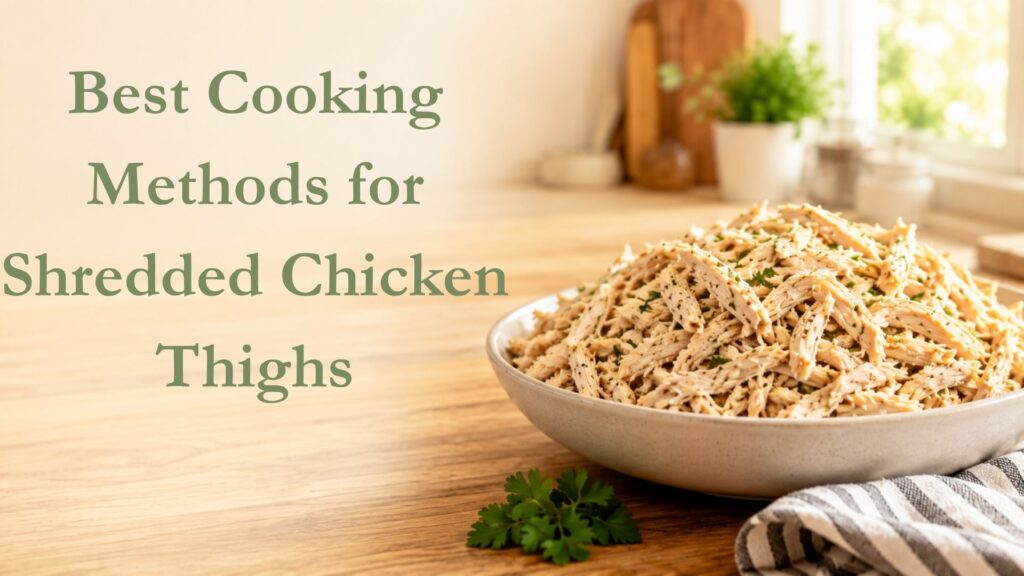
Chicken thighs are forgiving because they contain more fat and connective tissue than breast meat. Even so, cooking method changes how quickly the muscle fibers tighten, how much moisture escapes, and how soft the connective tissue becomes before shredding.
The basic principles remain the same across all methods: cooking chicken thighs for shredding works best when the meat reaches full doneness without unnecessary moisture loss and is shredded while still warm.
Cooking Methods Compared
| Method | Approximate cooking time | Moisture | Flavor | Best use | Main drawback |
|---|---|---|---|---|---|
| Gentle simmer | 15 to 35 minutes depending on cut | High | Mild | Meal prep, tacos, soup | No browning |
| Poaching | 20 to 35 minutes | High | Mild and controlled | Salads, wraps, flexible meal prep | Slower than pressure cooking |
| Oven roasting | 25 to 45 minutes | Moderate | Richer, browned | Tacos, sandwiches, casseroles | More moisture loss |
| Slow cooker | 3 to 6 hours depending on setting and batch | High | Rich | Large batches, sauced chicken | Can become overly soft |
| Pressure cooker | About 10 to 20 minutes under pressure plus pressure time | High | Moderate | Fast bulk prep | Easy to oversoften small pieces |
Why Cooking Method Changes Shredding Texture
Chicken thigh muscle is made of bundles of fibers held together by connective tissue. As heat moves through the meat, proteins contract while connective tissue gradually softens.
Gentler moist-heat methods limit surface drying and encourage easy fiber separation. Dry heat creates more browning and concentrated flavor but can drive more moisture from the exterior.
Long moist cooking can soften the connective structure so extensively that the thigh almost falls apart on its own. That can be useful for pulled chicken but less desirable when you want distinct strands.
Gentle Simmering
Gentle simmering is one of the most predictable methods for everyday shredded chicken thighs. Boneless thighs often take roughly 15 to 20 minutes, while bone-in pieces commonly need closer to 25 to 35 minutes.
Keep the liquid at small, steady bubbles rather than a violent boil. Hard boiling increases surface agitation and offers little advantage for shredding texture.
Best for: meal prep, tacos, soup, casseroles, and neutral chicken that will be seasoned afterward.
Drawback: simmered chicken develops little surface browning.
Poaching
Poaching uses lower, gentler heat than a typical simmer. The liquid stays hot but relatively calm, which gives good control over moisture and protein tightening.
The result is usually soft, clean-tasting chicken with distinct fibers. Because the heat is gentler, poaching can take slightly longer than a more active simmer.
Best for: chicken salad, wraps, meal prep, and dishes where another sauce supplies most of the flavor.
Drawback: minimal browning and a longer stove time than faster methods.
Oven Roasting
Roasting gives chicken thighs stronger surface flavor because dry heat promotes browning. Boneless thighs often cook in roughly 25 to 35 minutes, while large bone-in thighs may need 35 to 45 minutes or more depending on oven temperature and size.
The trade-off is greater moisture loss at the surface. Rest the thighs for about 5 to 10 minutes after cooking and shred them while still warm.
Best for: tacos, BBQ chicken, sandwiches, grain bowls, and dishes where browned flavor matters.
Drawback: edges can become dry if the thighs cook too long.
Slow Cooker
A slow cooker is useful for hands-off batch cooking. The long moist environment gradually softens connective tissue and can make the thighs very easy to pull apart.
The main risk is going too far. If the chicken remains hot for much longer than necessary, the fibers can become excessively soft and break into small pieces instead of controlled strands.
Best for: pulled chicken, meal prep, tacos, sandwiches, and sauced dishes.
Drawback: less texture control and a greater chance of overly soft chicken.
Pressure Cooking
Pressure cooking applies high heat under pressure, allowing thighs to become tender quickly. It is particularly useful for bulk preparation when stovetop monitoring is inconvenient.
Small boneless thighs can soften quickly, so excessive pressure time can turn them into very fine, fragile pieces. Bone-in thighs tolerate the method somewhat better because of their larger structure.
Best for: fast batch cooking, meal prep, tacos, casseroles, and sauced shredded chicken.
Drawback: less opportunity to check texture during cooking.
Best Method by Desired Outcome
| Desired result | Best method | Why |
|---|---|---|
| Clean, moist strands | Poaching | Gentle heat limits moisture loss |
| Fast everyday prep | Gentle simmer | Simple and easy to monitor |
| Browned flavor | Oven roasting | Dry heat develops surface browning |
| Hands-off bulk batch | Slow cooker | Minimal active work |
| Fast bulk cooking | Pressure cooker | Short active cooking time |
How Long Should Thighs Rest Before Shredding?
For most methods, let the chicken rest for about 5 to 10 minutes. The thighs should remain warm but should no longer be releasing heavy steam.
Warm fibers separate with less resistance than fully chilled chicken. A brief rest also lets some juices redistribute rather than immediately running onto the cutting board.
Best Shredding Tool After Each Cooking Method
| Cooking method | Useful shredding tool | Approximate shredding time | Expected texture |
|---|---|---|---|
| Simmered | Forks or hands | 2 to 5 minutes | Medium strands |
| Poached | Hands or forks | 2 to 5 minutes | Clean, moist strands |
| Roasted | Forks | 3 to 6 minutes | Firm, flavorful strands |
| Slow cooked | Forks | 1 to 3 minutes | Very soft pulled texture |
| Pressure cooked | Forks or stand mixer | 30 seconds to 3 minutes | Soft to medium shreds |
Manage Rendered Fat After Cooking
Moist cooking does not automatically mean the final chicken should sit in all of its rendered fat. Transfer the cooked thighs to a clean bowl, shred them, and add cooking liquid back gradually.
This is especially important when trying to keep shredded chicken thighs from becoming greasy, because the amount of fat produced differs substantially between skinless, skin-on, and heavily trimmed thighs.
What if You Want a Leaner Batch?
You do not have to use thighs alone. Combining dark and white meat can produce a firmer and less rich batch while maintaining better reheating tolerance than breast alone.
For that middle-ground texture, mixing chicken breast and thigh meat for shredding works well for meal prep, casseroles, tacos, and sandwiches.
Best Practical Choice
Use gentle simmering or poaching when moisture and control matter most, roasting when browned flavor matters, a slow cooker for hands-off batches, and pressure cooking when speed is the priority. Regardless of method, avoid unnecessary overcooking, rest the thighs briefly, and shred while warm for the easiest fiber separation.