
"As an Amazon Associate, I earn from qualifying purchases. This helps support this site at no extra cost to you."
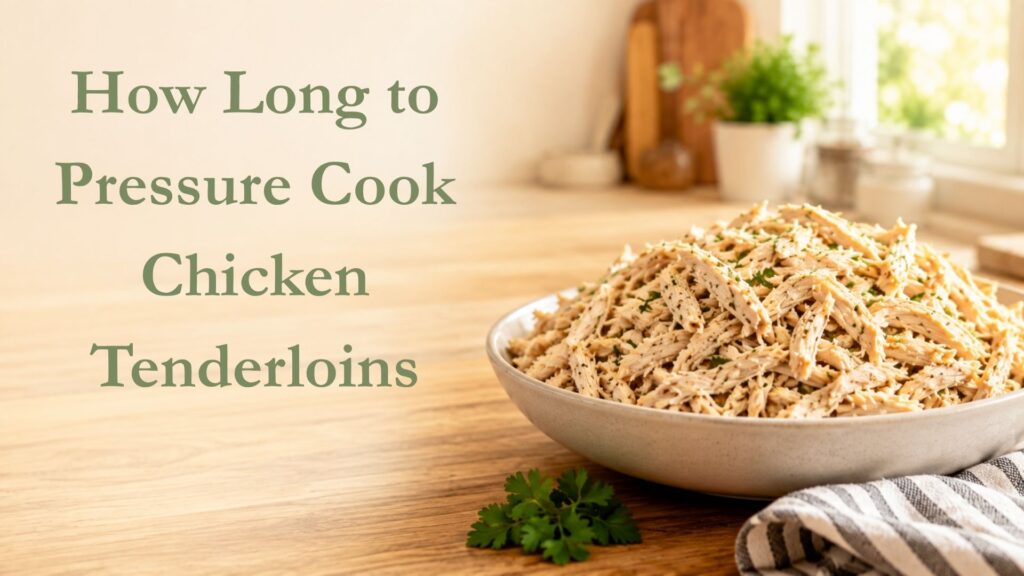
Chicken tenderloins usually need about 4 to 6 minutes at high pressure, followed by a short pressure release, when cooked specifically for shredding. Because tenderloins are small and lean, they cook much faster than full chicken breasts and can become dry or overly soft if left under pressure for too long.
The exact time depends on whether the tenderloins are fresh or frozen, how much liquid is in the cooker, and how quickly the cooker reaches pressure. The goal is fully cooked meat that still has enough moisture for the fibers to separate cleanly.
The same moisture-control principles used for cooking chicken tenderloins for shredding apply under pressure: avoid unnecessary cooking time and shred while the meat is still warm.
Pressure-Cooking Times for Chicken Tenderloins
| Tenderloin type | Approximate high-pressure time | Release | Expected result |
|---|---|---|---|
| Small fresh tenderloins | 3 to 4 minutes | Short natural release | Soft, moist strands |
| Average fresh tenderloins | 4 to 6 minutes | About 5 minutes natural release | Easy to shred |
| Large fresh tenderloins | 5 to 7 minutes | Short natural release | Moist if not overcooked |
| Frozen individual tenderloins | 6 to 9 minutes | Short natural release | Requires careful checking |
These times are working ranges. Pressure cookers differ in heat-up time, pressure regulation, capacity, and release behavior, so the total kitchen time is longer than the minutes shown on the timer.
Why Tenderloins Need Less Pressure Time Than Breasts
Tenderloins are narrower and thinner than whole chicken breasts. Heat reaches their center quickly, and the elevated temperature inside a pressure cooker accelerates protein tightening even further.
That combination makes tenderloins fast to cook but less tolerant of excessive pressure time. Once the proteins have tightened and the meat is fully cooked, extra time mostly increases moisture loss and softens the structure further.
How Pressure Cooking Affects Shredding Texture
Pressure cooking surrounds the chicken with hot steam and liquid in a sealed environment. This reduces surface drying compared with open roasting, but high heat can still tighten the muscle fibers rapidly.
Properly timed tenderloins pull into soft, short-to-medium strands. Overcooked tenderloins can become so soft that they break into small fragments instead of forming controlled shreds.
How to Pressure Cook Tenderloins for Shredding
- Add the minimum amount of cooking liquid required by your pressure cooker.
- Arrange the tenderloins so they are not frozen together in one dense block.
- Season the meat according to the final dish.
- Seal the cooker and cook fresh average tenderloins for about 4 to 6 minutes at high pressure.
- Allow roughly 5 minutes of natural pressure release before releasing the remaining pressure according to the appliance instructions.
- Check the thickest pieces for full doneness.
- Transfer the chicken out of excess liquid and rest for about 3 to 5 minutes.
- Shred while warm using forks, hands, or a mixer.
Why the Release Time Matters
Chicken continues cooking while pressure falls naturally. A long natural release therefore adds effective cooking time even after the programmed timer has stopped.
Tenderloins usually do not need the extended natural release that may be useful with tougher meats. A short release period gives carryover cooking time without holding the lean pieces at high temperature unnecessarily.
Fresh vs Frozen Tenderloins Under Pressure
Frozen tenderloins need additional heating because the center must first warm through the frozen range before normal cooking progresses. Individually frozen pieces are much easier to cook predictably than several tenderloins frozen into a solid block.
The difference between fresh and frozen chicken tenderloins becomes particularly important in a pressure cooker because there is no opportunity to check individual pieces once the cooker is sealed.
Pressure Cooking vs Slow Cooking
| Factor | Pressure cooker | Slow cooker |
|---|---|---|
| Active cooking speed | Very fast | Slow |
| Texture control | Moderate | Moderate |
| Moisture environment | High | High |
| Risk | Over-softening quickly | Drying or stringiness from extended time |
| Best use | Fast meal prep | Hands-off cooking |
If hands-off timing matters more than speed, slow cooking chicken tenderloins provides a gentler environment but requires much more time and still needs careful control because the pieces are lean.
Best Shredding Tools After Pressure Cooking
| Tool | Approximate time | Expected texture | Main drawback |
|---|---|---|---|
| Hands | 1 to 3 minutes | Coarse to medium | Requires safe handling temperature |
| Two forks | 2 to 4 minutes | Medium | More hand effort |
| Hand mixer | 15 to 40 seconds | Fine | Very soft meat can over-shred quickly |
| Stand mixer | 15 to 40 seconds | Fine to medium | Small batches may not circulate evenly |
Common Pressure-Cooking Mistakes
- Using full-breast timing: tenderloins are much smaller and need less time.
- Using a long natural release: the chicken continues cooking while pressure falls.
- Leaving the meat in hot liquid: remove it once done if you want controlled strands.
- Over-mixing after pressure cooking: very tender pieces can break apart almost instantly.
Best Practical Time
For average fresh chicken tenderloins, use about 4 to 6 minutes at high pressure with a short natural release. Frozen individual pieces usually need several additional minutes. Remove the chicken promptly, rest briefly, and shred while warm for better texture control.