
"As an Amazon Associate, I earn from qualifying purchases. This helps support this site at no extra cost to you."
To shred bone-in chicken breast, cook it fully, rest it for about 5 to 10 minutes, remove the skin if desired, pull the meat away from the breastbone and ribs, inspect for small bones or cartilage, then shred the clean meat while it is still warm.
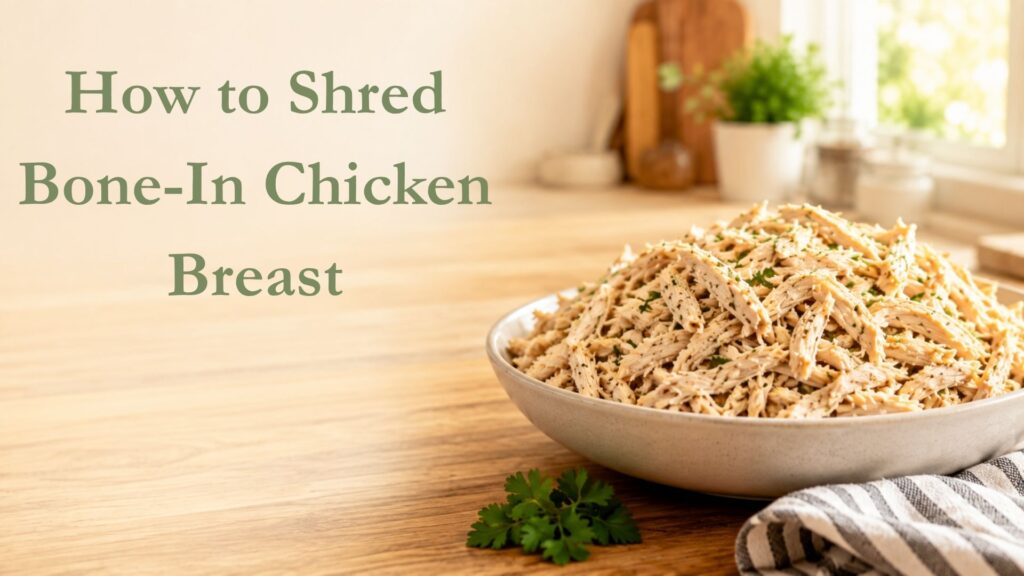
The deboning step matters more than the shredding tool. Once every hard fragment is removed, breast meat can be shredded with hands, forks, a mixer, or a shredder bowl much like boneless chicken.
The cooking stage determines how easily the meat releases, so controlled cooking for bone-in chicken should leave the breast fully cooked without drying the long muscle fibers.
Why Bone-In Breast Needs a Different Workflow
Breast meat contains long bundles of lean muscle fibers. In a bone-in breast, those fibers sit against the breastbone, ribs, connective tissue, and sometimes skin.
Heat tightens muscle proteins while softening connective tissue. Once the chicken is properly cooked, larger sections of meat should peel away with moderate pressure rather than rubbery resistance.
Best Tools for Bone-In Breast
| Tool | Best use | Approximate time | Main drawback |
|---|---|---|---|
| Hands | Removing meat from bone | 2 to 5 minutes | Requires safe handling temperature |
| Small fork | Releasing tight sections | Moderate | Slower than hands |
| Two forks | Final shredding | 2 to 5 minutes | More hand effort |
| Hand mixer | Fine shredding after inspection | 30 to 90 seconds | Never use before deboning |
| Stand mixer | Larger clean batches | 30 to 90 seconds | More cleanup |
Step-by-Step: Shred Bone-In Chicken Breast
- Cook the bone-in breast fully using moderate heat or a controlled moist method.
- Remove it from the heat and rest for about 5 to 10 minutes.
- Place the breast on a clean tray or shallow bowl.
- Remove the skin if it is not wanted in the finished chicken.
- Pull the large breast-muscle sections away from the breastbone and ribs.
- Use fingers or a fork to release smaller sections still attached around the bone.
- Inspect the meat carefully for bone, cartilage, and hard connective fragments.
- Move only clean meat into a separate bowl.
- Shred to the texture needed for the dish.
For one breast, deboning and shredding commonly takes about 3 to 7 minutes once the chicken is cool enough to handle safely.
Where Small Bones Can Hide
Pay particular attention to the rib area and any section where bone was cut during processing. Small fragments can remain attached to meat even after the main breastbone has been removed.
A separate clean-meat bowl makes inspection easier because every piece passes through your hands before it reaches the final pile.
This sorting step is especially important when removing small bones before shredded chicken reaches powered tools.
Do Not Put Bone-In Chicken Directly Into a Mixer
A mixer applies repeated pulling and impact forces quickly. If a hard fragment remains in the batch, it can be distributed through the shredded chicken before you notice it.
Debone first, inspect second, and mechanically shred only after the meat is clearly separated from all bone and cartilage.
How Warm Should the Chicken Be?
Warm but not heavily steaming is usually the easiest state. Connective tissue remains soft and the muscle fibers are flexible enough to separate cleanly.
If the breast becomes refrigerator-cold first, both the fibers and connective tissue become firmer, increasing the effort required for deboning and shredding.
How to Tell When the Meat Will Release
- The breast is fully cooked.
- The main meat sections pull away without rubbery stretching.
- Connective tissue near the bone feels soft rather than tight.
- A fork can lift substantial sections cleanly from the bone.
The same structural change explains when cooked chicken starts releasing from the bone as connective tissues soften.
Best Shred Texture by Use
| Use | Texture | Best tool |
|---|---|---|
| Chicken salad | Coarse to medium | Hands or forks |
| Tacos | Medium | Forks or mixer briefly |
| Soup | Medium | Hands or forks |
| Casseroles | Fine to medium | Mixer |
| Meal prep | Medium | Forks or stand mixer |
Common Mistakes
- Deboning while heavily steaming: handling becomes difficult and juices can run heavily.
- Ignoring the rib area: small fragments can remain behind.
- Using a mixer too early: all bones and cartilage must be removed first.
- Waiting until fully chilled: connective tissue and fibers become firmer.
- Over-shredding breast meat: very fine fibers can dry more quickly.
Best Practical Method
Cook the breast fully, rest it for about 5 to 10 minutes, remove the meat manually, inspect every piece, then shred the clean meat while warm.
Medium strands usually provide the best balance between moisture retention, texture control, and versatility across salads, tacos, soups, and meal prep.