
"As an Amazon Associate, I earn from qualifying purchases. This helps support this site at no extra cost to you."
Bone-in chicken is not automatically better for shredding, but it can be more forgiving during moist cooking and often produces meat that releases cleanly once connective tissue has softened. Boneless chicken is faster and easier to handle, while bone-in cuts usually require more cooking time and an extra deboning step.
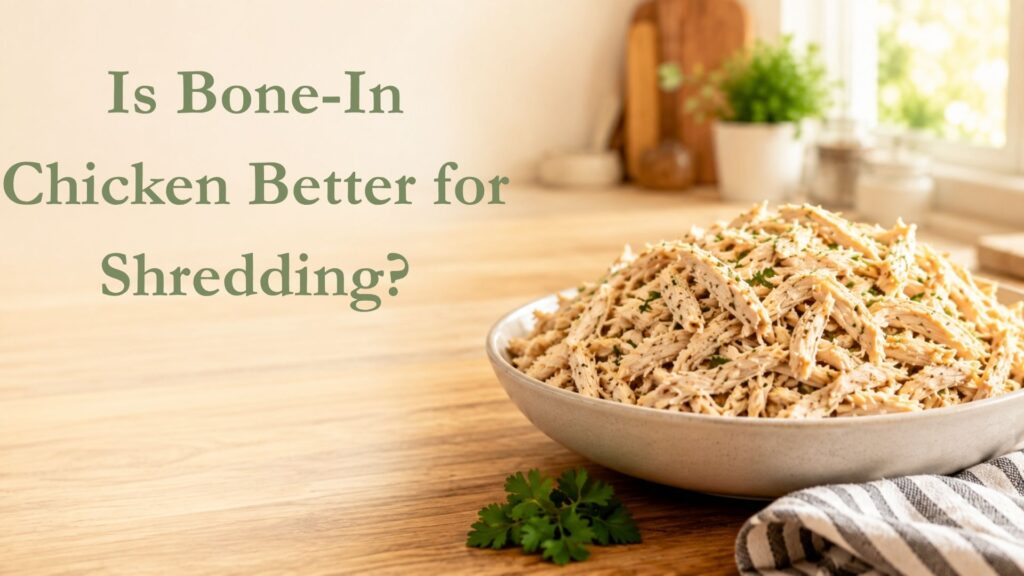
The bone itself does not make chicken shred. The bigger differences come from cut thickness, connective tissue, skin, fat, and the longer cooking methods commonly used with bone-in pieces.
Those variables are central to cooking bone-in chicken until the meat is ready to shred, especially when the goal is soft fibers without turning the meat dry or excessively soft.
How Bone-In Chicken Behaves During Cooking
Chicken meat consists of bundles of muscle fibers held together by connective tissue. Heat tightens the muscle proteins while connective structures gradually soften.
Bone-in cuts are often thicker and less uniform than boneless pieces. Heat therefore takes longer to reach the deepest meat around bones and joints.
That longer cooking window can suit thighs, legs, and quarters because connective tissue has more time to soften before the meat is removed.
Bone-In vs Boneless Chicken at a Glance
| Factor | Bone-in chicken | Boneless chicken |
|---|---|---|
| Cooking time | Usually longer | Usually shorter |
| Preparation after cooking | Needs deboning | Can shred immediately |
| Moisture tolerance | Often more forgiving depending on cut | More sensitive in lean cuts |
| Shredding speed | Slower overall | Faster |
| Cleanup | More bones and scraps | Less waste to sort |
| Best use | Slow cooking, soups, pulled chicken | Fast meal prep |
Does the Bone Keep Chicken Moist?
The bone does not add moisture back into the meat. Bone-in pieces are simply often thicker and may retain skin and connective tissue, which can reduce surface drying during some cooking methods.
Cooking technique still matters more. A bone-in breast held at high heat too long can become dry, while a gently cooked boneless thigh can remain moist.
When Bone-In Chicken Is Easier to Shred
- Slow-cooked thighs: softened connective tissue allows easy separation.
- Chicken quarters: long moist cooking can make leg and thigh meat release readily.
- Soup chicken: simmering softens meat around joints while also producing cooking liquid.
- Pressure-cooked pieces: connective tissue can soften quickly and reduce shredding effort.
When Boneless Chicken Is More Practical
Boneless chicken usually wins when speed and simplicity matter. There is no bone-removal stage, portions are easier to weigh, and the meat can go directly into forks, a mixer, or a shredder bowl.
The practical difference between bone-in and boneless chicken for pulled chicken becomes especially noticeable when preparing several pounds at once.
Why Meat Pulls Away From the Bone
As cooking continues, connective tissue around joints and between muscle groups weakens. Once sufficiently softened, meat can separate from the bone with light fork or finger pressure.
Thighs, drumsticks, and quarters commonly reach this stage more readily than lean breast meat.
This structural change explains when chicken meat begins releasing easily from the bone during longer cooking.
Best Tools for Bone-In Chicken
| Tool | Best role | Approximate time | Drawback |
|---|---|---|---|
| Hands | Deboning and coarse shredding | 2 to 6 minutes | Chicken must cool enough to handle |
| Two forks | Controlled shredding after deboning | 2 to 5 minutes | Slower for large batches |
| Hand mixer | Fast shredding after careful deboning | 30 to 90 seconds | All bone fragments must be removed first |
| Stand mixer | Large deboned batches | 30 to 90 seconds | Extra cleanup |
| Shredder bowl | Uniform short strands | 1 to 3 minutes | Requires careful inspection first |
Main Drawbacks of Bone-In Chicken
- Longer cooking time
- Extra deboning work
- Possible small bone or cartilage fragments
- Less predictable raw-to-cooked meat yield
- More scraps after cooking
Best Practical Choice
Choose bone-in chicken when moist cooking, dark-meat texture, and connective-tissue softening matter more than speed. Choose boneless chicken when you need fast, clean, predictable meal prep.
For shredding alone, neither format automatically wins. The cut, cooking method, final texture, resting time, and careful bone removal matter more.