
"As an Amazon Associate, I earn from qualifying purchases. This helps support this site at no extra cost to you."
Yes, chicken tenderloins can be shredded, and they usually pull apart quickly because they are small, lean pieces with relatively short muscle fibers. The main challenge is moisture control. Tenderloins cook faster than full chicken breasts, so leaving them on the heat for too long can tighten the proteins and produce dry, stringy shreds.
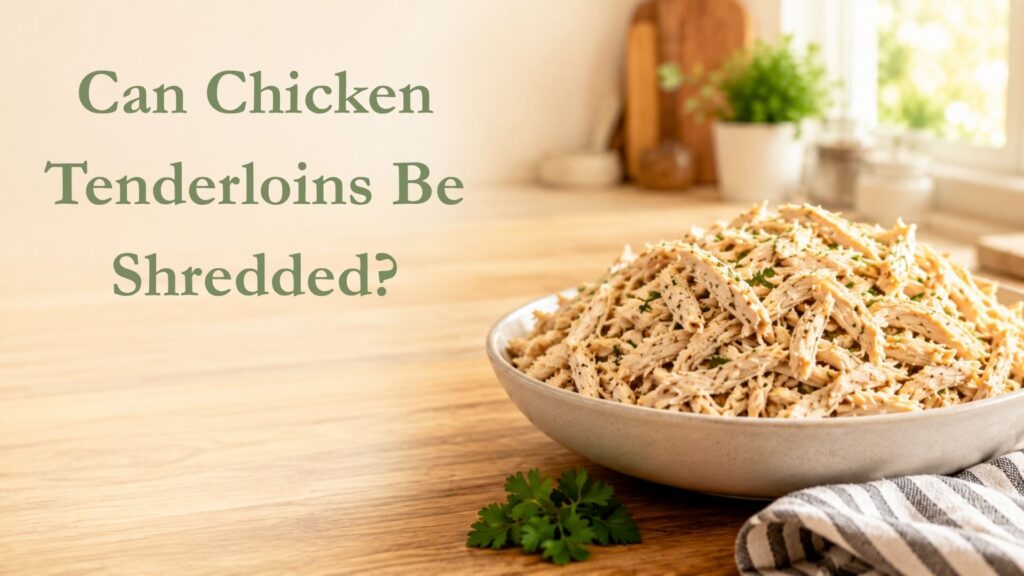
When cooked gently and shredded while warm, tenderloins work well for tacos, wraps, chicken salad, casseroles, soups, and smaller meal-prep batches. Their small size also makes them useful when you need shredded chicken quickly without cooking a whole breast.
The basic process starts with cooking chicken tenderloins for shredding only until they are fully done and still moist enough for the fibers to separate easily.
Why Chicken Tenderloins Can Be Shredded
Chicken tenderloins are narrow strips of muscle located beneath the breast. Like breast meat, they consist of bundles of muscle fibers held together by connective tissue, but the pieces are much smaller and thinner than a full breast.
As the tenderloin cooks, heat causes proteins in those fibers to tighten. Once the meat is fully cooked, the bundles can be separated with forks, fingers, a mixer, or another shredding tool.
Because the pieces are thin, heat reaches the center quickly. That is useful for speed, but it also means the difference between moist and overcooked can be only a few minutes.
Tenderloins vs Full Chicken Breasts
| Factor | Chicken tenderloins | Chicken breast |
|---|---|---|
| Piece size | Small and narrow | Large and thick |
| Cooking speed | Fast | Slower |
| Risk of drying | High if overcooked | Moderate to high |
| Typical shred length | Short to medium | Medium to long |
| Best batch size | Small to medium | Medium to large |
The difference becomes especially useful when comparing chicken tenderloins and chicken breast for shredding, since tenderloins favor speed while full breasts usually give longer strands and larger batch yield.
What Texture Should You Expect?
Properly cooked tenderloins usually produce soft, lean strands. Because each piece is small, the finished fibers tend to be shorter than those from a large chicken breast.
- Hands: coarse, natural strands with good control.
- Two forks: medium, slightly irregular strands.
- Hand mixer: fine, short shreds very quickly.
- Stand mixer: fast for larger batches but easy to over-process.
- Shredder bowl: short, fairly uniform pieces.
Best Tools for Shredding Chicken Tenderloins
| Tool | Approximate time | Texture | Mess | Main drawback |
|---|---|---|---|---|
| Hands | 1 to 3 minutes | Coarse to medium | Medium | Chicken must cool enough to handle |
| Two forks | 2 to 4 minutes | Medium | Low | More hand effort |
| Hand mixer | 20 to 45 seconds | Fine | Medium | Very easy to over-shred |
| Stand mixer | 20 to 45 seconds | Fine to medium | Low | Small batches may not circulate well |
| Shredder bowl | 30 to 60 seconds | Short, uniform | Low | Extra tool to clean |
How to Shred Chicken Tenderloins
- Cook the tenderloins fully without extending the cooking time unnecessarily.
- Rest them for about 3 to 5 minutes until heavy steaming subsides.
- Transfer them to a shallow bowl or cutting board.
- Pull along the direction of the muscle fibers using fingers or forks.
- Stop once the strands match the texture needed for the dish.
- Add a small amount of reserved cooking liquid only if the chicken seems dry.
A small batch can usually be shredded in about 1 to 4 minutes, depending on the tool.
Why Tenderloins Dry Out Quickly
Tenderloins are lean and thin. Once heat tightens the proteins, additional cooking pushes out moisture quickly because there is little thickness protecting the center from continued heat.
The result can shift from juicy to firm and stringy faster than with chicken thighs. Temperature checks and early removal matter more than trying to cook the meat until it visibly falls apart.
Should Tenderloins Fall Apart Before Shredding?
No. Tenderloins do not need to collapse during cooking. They only need to be fully cooked and tender enough for the fibers to separate with light pressure.
If the pieces are already crumbling before shredding begins, they may have cooked longer than necessary. That can still work for casseroles or fillings, but it gives you less control over strand size.
Can You Use a Mixer?
Yes, but tenderloins need very little mixer time because the pieces are small and already tender. A few short bursts can be enough to separate the fibers.
When speed matters, shredding chicken tenderloins with a mixer can reduce active work to well under a minute, but over-processing can turn the meat into tiny fragments.
Best Uses for Shredded Tenderloins
| Dish | Best shred texture | Why |
|---|---|---|
| Tacos | Medium | Holds sauce while keeping structure |
| Chicken salad | Medium to coarse | Maintains texture in dressing |
| Casseroles | Fine to medium | Distributes evenly |
| Soup | Medium | Stays recognizable in broth |
| Meal prep | Medium | Flexible for reheating and multiple dishes |
Best Practical Approach
Cook tenderloins only until fully done, rest them for about 3 to 5 minutes, and shred while warm. Forks or hands provide the most control, while a mixer works when speed matters. The main priority is avoiding unnecessary cooking time because these small lean pieces lose moisture quickly.