
"As an Amazon Associate, I earn from qualifying purchases. This helps support this site at no extra cost to you."
You can poach chicken successfully in either water or chicken broth. Water gives the most neutral and flexible shredded chicken, while broth adds a more savory base flavor before the chicken is shredded.
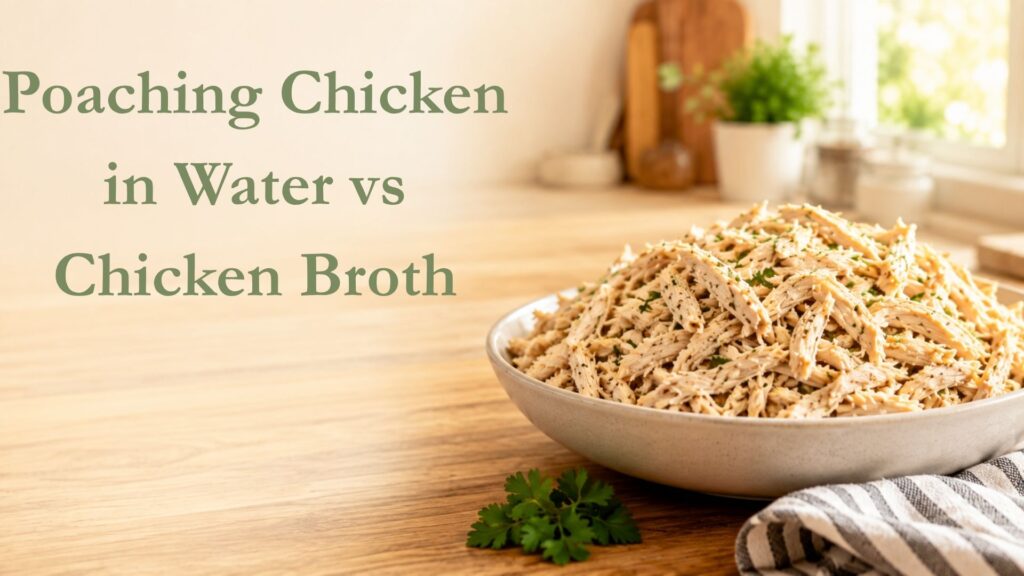
The cooking mechanism is essentially the same in both cases. A controlled poaching method for shredded chicken relies on gentle liquid heat to cook the muscle fibers without exposing them to an unnecessary rolling boil.
Water vs Broth at a Glance
| Factor | Water | Chicken broth |
|---|---|---|
| Flavor | Neutral | Savory |
| Versatility | Very high | Moderate to high |
| Salt control | Complete control | Depends on broth sodium |
| Cost | Very low | Higher |
| Best use | General meal prep | Soup, casseroles, savory dishes |
| Shredding effect | Essentially the same | Essentially the same |
Does Broth Make Chicken More Tender?
Not in the basic mechanical sense. Chicken becomes shreddable because heat changes the muscle proteins and connective structures. Water and broth both transfer heat into the meat.
Broth can make the finished chicken taste richer, but it does not replace temperature control. Chicken simmered aggressively in broth can still become dry, while chicken gently poached in plain water can remain moist and tender.
The temperature used while poaching chicken has a much larger effect on moisture and texture than whether the surrounding liquid began as water or broth.
When Water Is the Better Choice
Plain water works especially well when the chicken will be divided among several dishes with different flavor profiles.
- Tacos: neutral chicken can receive salsa, chili, cumin, or taco seasoning later.
- Chicken salad: mild meat does not compete with dressing, herbs, or vegetables.
- Meal prep: one batch can become several different lunches or dinners.
- Strongly sauced dishes: the finishing sauce provides most of the flavor anyway.
Water also gives you full control over salt. You decide exactly how much seasoning enters the poaching liquid.
When Chicken Broth Is the Better Choice
Broth is useful when you already know the shredded chicken is going into a savory dish where a mild chicken flavor supports the final result.
- Chicken soup: broth gives the meat a flavor that matches the surrounding liquid.
- Casseroles: the savory base works well with creamy or baked fillings.
- Sandwiches: broth can make plain shredded chicken taste more seasoned before dressing is added.
- Rice or grain bowls: savory chicken can be used with minimal additional seasoning.
Watch the Salt in Broth
Commercial chicken broth varies widely in sodium. If you salt the pot before checking the broth, the finished chicken can become more seasoned than intended.
Taste or check the label first. Low-sodium or unsalted broth gives you more control, especially when the shredded chicken will later be mixed with salty sauces, cheese, dressing, or seasoned stock.
Can You Combine Water and Broth?
Yes. A mixture of water and broth is often a practical middle ground. It gives the chicken some savory flavor without requiring a large volume of broth or making the poaching liquid too salty.
A 50:50 mixture works well as a starting point, but there is no requirement to measure it precisely. The important factor is having enough liquid to surround the chicken while keeping the seasoning balanced.
Step-by-Step: Poaching in Water
- Arrange the chicken in a saucepan in a single layer.
- Add enough water to cover it by roughly 1/2 to 1 inch.
- Add a modest amount of salt and optional aromatics such as garlic, onion, pepper, or bay leaf.
- Heat gradually until the liquid reaches a gentle poaching range.
- Reduce the burner to prevent vigorous bubbling.
- Cook until the thickest part of the chicken reaches 165°F (74°C).
- Rest for about 5 minutes and shred while warm.
Step-by-Step: Poaching in Broth
- Place the chicken in the pot and add enough broth to cover the meat.
- Check the broth seasoning before adding additional salt.
- Add only mild aromatics if the broth is already strongly flavored.
- Heat gradually and keep the liquid below a hard boil.
- Begin checking the chicken near the expected finishing time.
- Remove each piece when the thickest section reaches 165°F (74°C).
- Reserve some broth if you may want to moisten the finished shreds.
Does Broth Change the Poaching Time?
Not enough to use a different timing rule in normal kitchen practice. Both water and broth are mostly water and transfer heat in a similar way.
Chicken thickness still matters much more. Average boneless breasts often fall within the same 12 to 18 minute working range regardless of whether they are surrounded by water or broth.
The more detailed poaching time for chicken breast should therefore be based on the size and center temperature of the meat rather than the flavor of the liquid.
Can You Use the Poaching Liquid Afterward?
You can reserve some of the cooked poaching liquid for immediate kitchen use if it has been handled appropriately. Broth may be useful for moistening shredded chicken or adding to a soup, casserole, rice dish, or sauce.
Plain water used for poaching will pick up chicken juices and some flavor but is generally much lighter than prepared stock. If you only need moisture for the finished shreds, a few tablespoons may be enough.
How Water and Broth Affect Shred Texture
| Outcome | Water | Broth |
|---|---|---|
| Fiber separation | Essentially the same | Essentially the same |
| Moisture | Depends on temperature and timing | Depends on temperature and timing |
| Flavor after shredding | Neutral | More savory |
| Seasoning flexibility | High | Slightly lower |
| Ability to add cooking liquid back | Light flavor | More flavorful |
Best Choice by Use Case
| Use | Best liquid | Why |
|---|---|---|
| Tacos | Water or lightly seasoned broth | Leaves room for stronger final seasoning |
| Chicken salad | Water | Clean neutral flavor |
| Soup | Broth | Matches the final dish |
| Casseroles | Broth | Adds savory background flavor |
| Mixed meal prep | Water | Highest versatility |
| Sandwich filling | Water or broth | Either works depending on dressing |
Common Liquid Mistakes
- Assuming broth keeps chicken moist by itself: overcooking in broth can still produce dry meat.
- Adding too much salt to prepared broth: check the existing sodium first.
- Using expensive broth when the chicken will receive a strong sauce: plain water may work just as well.
- Boiling either liquid aggressively: the cooking temperature matters more than the liquid flavor.
- Using too much liquid: excess volume takes longer to heat and dilutes seasonings.
Best Overall Choice
Use water when you want maximum versatility and chicken broth when you want a stronger savory base. For shredding texture, neither liquid has a major advantage on its own. Gentle heat, accurate doneness, and prompt removal from the pot have a much larger effect on whether the chicken stays moist and separates easily.