
"As an Amazon Associate, I earn from qualifying purchases. This helps support this site at no extra cost to you."
To keep boiled chicken moist for shredding, cook it at a gentle simmer rather than a rolling boil, remove it once the thickest part reaches at least 165°F (74°C), rest it for about 5 minutes, and shred it while still warm. If needed, mix a small amount of warm cooking liquid back into the finished shreds.
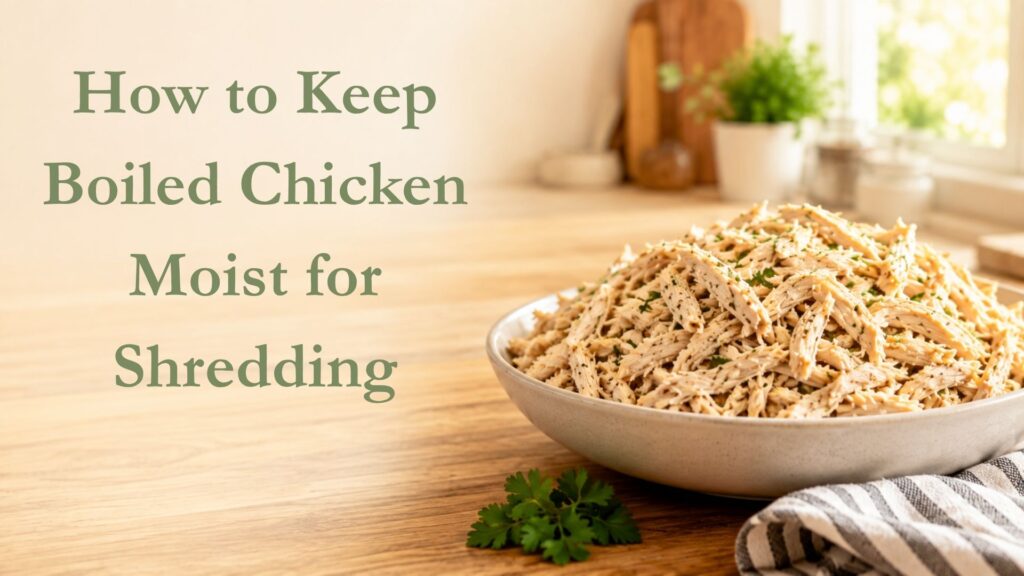
Moisture control begins during cooking rather than after the chicken becomes dry. Heat tightens muscle proteins, and prolonged heating squeezes more water from the fibers. The best result comes from stopping the cooking process once the chicken is safely done and structurally ready to pull apart.
That moisture-first approach is built into boiling chicken for shredding, where simmer intensity, timing, resting, and shredding temperature all affect the final strands.
The Main Moisture Controls
| Factor | Better approach | What it prevents |
|---|---|---|
| Heat level | Gentle simmer | Harsh exterior cooking |
| Doneness | Remove when fully cooked | Unnecessary moisture loss |
| Resting | About 5 minutes | Immediate juice loss during shredding |
| Shredding temperature | Warm, not heavily steaming | Excess handling difficulty and moisture loss |
| Storage | Store with a little liquid when needed | Drying during refrigeration |
Why Boiled Chicken Can Still Become Dry
Water around the chicken and water inside the muscle fibers are not the same thing. During heating, chicken proteins change shape and contract. As they tighten, some internal water is forced out into the cooking liquid.
Keeping chicken submerged therefore prevents exposed surfaces from drying in air, but it does not stop heat-driven moisture loss inside the meat.
This explains why overboiling chicken can still make it dry even though the meat remains underwater the entire time.
Use a Gentle Simmer
Bring the cooking liquid to a boil, then reduce the burner until the surface shows small, steady bubbles. The chicken does not need to bounce around the pot.
Gentler heat gives the center time to reach temperature while reducing the difference between the hot exterior and cooler interior. This is especially useful for thick chicken breasts, which can dry around the edges before their centers finish if the pot stays at a hard boil.
Remove Chicken as Individual Pieces Finish
Chicken pieces rarely have exactly the same thickness. If one breast reaches the target temperature before the others, remove that piece rather than keeping it simmering until the entire batch catches up.
This is one of the simplest ways to prevent unnecessary cooking in mixed-size batches.
Step-by-Step Moisture-Preserving Method
- Arrange the chicken in a pot with enough space for liquid to circulate.
- Add enough water or broth to cover the meat by roughly 1 inch.
- Bring the liquid toward a boil, then immediately reduce it to a gentle simmer.
- Begin checking the thickest pieces near the lower end of their expected cooking range.
- Remove each piece once its thickest section reaches at least 165°F (74°C).
- Rest the chicken for about 5 minutes.
- Shred it while warm using the tool that matches your desired texture.
- If the shreds seem dry, fold in a small amount of warm cooking liquid.
Why Resting Helps Before Shredding
Straight from the pot, the outside of the chicken is hotter than the center. During a short rest, heat continues moving inward and temperatures begin to equalize.
The chicken also stops releasing heavy steam, which makes it easier to handle. About 5 minutes is generally enough for a normal breast or thigh without allowing the meat to become fully chilled and firm.
Do Not Let the Chicken Cool Completely Before Shredding
Cold chicken can still be shredded, but the fibers firm as the meat chills. That usually increases the force and time needed to separate them.
Warm but not heavily steaming chicken gives a useful balance: easier fiber separation, safer handling, and less time spent pulling at firm chilled meat.
Add Cooking Liquid Back Carefully
If the shredded chicken feels slightly dry, add about 1 tablespoon of warm cooking liquid per cup of chicken, toss gently, and reassess. Add another tablespoon only if necessary.
Adding too much at once can make the chicken watery and dilute sauces or dressings used later.
Chicken Breast Versus Thigh Moisture
| Factor | Breast | Thigh |
|---|---|---|
| Fat content | Lower | Higher |
| Cooking tolerance | Narrower | Wider |
| Typical shred | Lean and distinct | Moist and softer |
| Dryness risk | Higher | Lower |
| Best moisture strategy | Remove promptly | Control simmer and avoid excessive time |
How Shredding Tool Affects Moisture Perception
| Tool | Typical texture | Time | Moisture effect | Drawback |
|---|---|---|---|---|
| Two forks | Medium strands | 2 to 5 minutes | Preserves substantial pieces | More hand effort |
| Hands | Coarse to medium | 1 to 4 minutes | Good control over dry areas | Requires cooling |
| Hand mixer | Fine strands | 30 to 60 seconds | More surface area can make dry meat seem drier | Easy to over-shred |
| Stand mixer | Fine to medium | 20 to 60 seconds | Fast, but texture changes quickly | Extra cleanup |
| Shredder bowl | Short strands | 30 to 90 seconds | Controlled if stopped early | Can process soft meat too finely |
Keep Shredded Chicken Moist During Storage
If the chicken will not be used immediately, place the shreds in a shallow airtight container once they have cooled enough for storage. Mixing in a small amount of cooking liquid before refrigeration can help prevent exposed strands from becoming dry.
Do not leave the chicken soaking in a large amount of broth unless the final dish requires that texture. A lightly moistened surface is usually enough.
Moisture by Use Case
- Tacos: keep the chicken slightly moist, then finish with sauce or seasoned cooking liquid.
- Chicken salad: avoid making the shreds wet because dressing will add moisture later.
- Soup: slightly dry chicken is less noticeable because it will return to broth.
- Meal prep: retain a small amount of liquid to protect the chicken during reheating.
- Casseroles: use medium shreds and rely on the surrounding sauce for final moisture.
Check Readiness Before Moisture Starts Dropping
Moist chicken is easiest to achieve when you identify doneness promptly. Combining temperature with the physical signs that chicken is ready to shred helps you remove it before several unnecessary minutes of simmering reduce its moisture.
Common Moisture Mistakes
- Keeping fully cooked chicken in boiling liquid: hot water continues transferring heat into the meat.
- Using a rolling boil throughout: intense heat gives less control over the exterior texture.
- Shredding extremely finely: greater surface area can make lean chicken seem drier.
- Adding too much broth afterward: wet chicken is not the same as internally moist chicken.
- Storing uncovered: exposed shreds lose surface moisture quickly in the refrigerator.
Best Working Method
Keep the pot at a gentle simmer, remove each piece as soon as it is fully cooked, rest for about 5 minutes, and shred while warm. If the finished chicken needs more moisture, add warm cooking liquid gradually at roughly 1 tablespoon per cup until the strands are lightly moist without becoming watery.