
"As an Amazon Associate, I earn from qualifying purchases. This helps support this site at no extra cost to you."
To keep shredded chicken thighs from becoming greasy, separate the meat from excess rendered fat before shredding, remove soft skin unless you want it in the final dish, and add cooking juices back gradually instead of pouring everything over the meat at once.
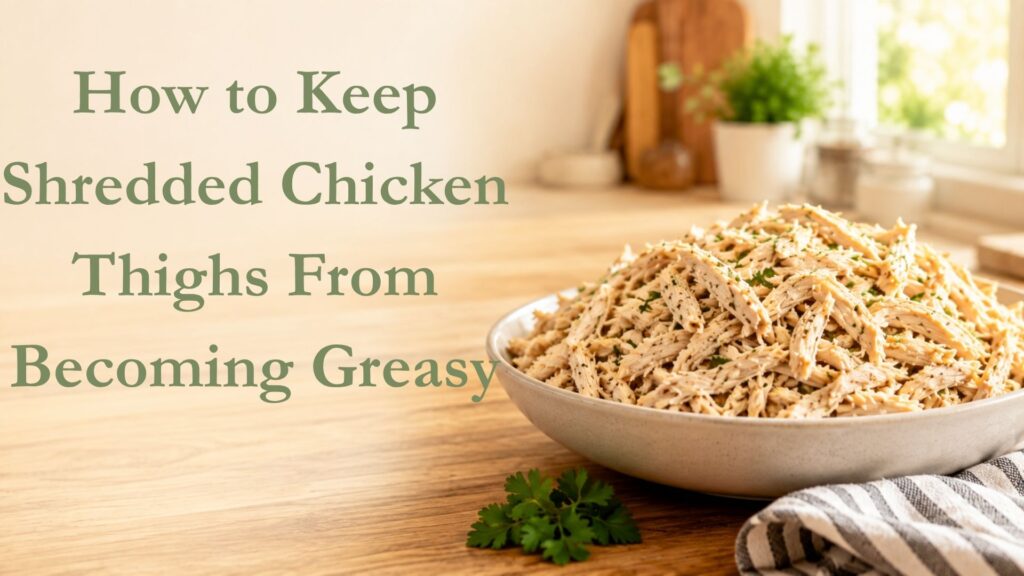
Chicken thighs naturally contain more fat than breast meat, so some richness is expected. The problem usually appears when rendered fat, skin, and oily cooking liquid all get mixed into the shredded meat together.
Good fat control starts with the way you cook chicken thighs for shredding, because cooking method determines how much fat renders and where it collects.
Why Shredded Chicken Thighs Can Become Greasy
Chicken thigh muscle contains more intramuscular fat and connective tissue than breast meat. As the thighs heat, muscle proteins tighten, connective tissue softens, and some fat melts out of the meat.
That rendered fat often collects in the pan, pot, or cooking liquid. If the chicken is shredded directly in that fat, the strands become coated rather than simply remaining moist.
The difference is easy to feel: properly moist shredded thigh meat feels tender and juicy, while greasy chicken leaves visible oil on the bowl and feels slick rather than succulent.
Moist Chicken and Greasy Chicken Are Not the Same
| Condition | What you see | What you feel | Main cause |
|---|---|---|---|
| Moist | Light sheen | Tender fibers | Juices retained in meat |
| Greasy | Visible oil coating strands | Slick surface | Too much rendered fat mixed back in |
| Dry | Dull fibers | Firm or stringy | Too much moisture loss |
| Wet | Liquid pooling | Soft or diluted texture | Excess cooking liquid |
Remove Soft Skin Before Shredding
Soft cooked skin contains substantial fat and does not separate into muscle fibers. If it is mixed through the chicken, it can create chewy, slippery pieces while adding more fat to the bowl.
This is one of the main practical differences between skin-on and skinless chicken thighs for shredding. Skinless thighs require less fat management after cooking.
Shred in a Clean Bowl
One of the simplest ways to control greasiness is to transfer the cooked thighs to a clean bowl before shredding. Leave the rendered fat behind in the cooking pan or pot.
Once the chicken has been shredded, you can add back a small amount of cooking liquid if the fibers seem dry. This is easier to control than trying to remove fat after it has coated every strand.
Step-by-Step Method for Less Greasy Shredded Thighs
- Cook the chicken thighs fully using your preferred method.
- Rest them for about 5 to 10 minutes until heavy steaming subsides.
- Remove skin and visible loose fat if present.
- Transfer the meat away from accumulated rendered fat.
- If using bone-in thighs, remove the bones and cartilage.
- Shred the meat in a clean bowl.
- Add reserved cooking juices back 1 tablespoon at a time only if the chicken needs more moisture.
- Stop adding liquid when the strands are moist but no oil is pooling at the bottom.
For a family-size batch, the fat-control and shredding steps usually take about 5 to 8 minutes.
Let Rendered Fat Separate From Cooking Juices
Rendered fat and water-based cooking juices are not the same thing. If the pan liquid sits briefly, the fat often rises toward the surface.
You can spoon off some of that visible fat and use the remaining flavorful liquid more selectively. For chilled leftovers, the fat may become firm on top and can be removed even more easily.
Tool Choice Can Affect Greasiness
| Tool | Approximate time | Texture | Grease control | Drawback |
|---|---|---|---|---|
| Hands | 2 to 5 minutes | Coarse | Excellent because fat can be removed as you work | Chicken must cool enough to handle |
| Two forks | 3 to 7 minutes | Medium | Good | More effort |
| Hand mixer | 30 to 60 seconds | Fine | Moderate if bowl is clean | Can distribute residual fat very thoroughly |
| Stand mixer | 30 to 90 seconds | Fine to medium | Moderate | Easy to add too much liquid while mixing |
| Shredder bowl | 30 to 90 seconds | Short strands | Good if meat is drained first | Fat can coat the bowl and blades |
Do Not Rinse Cooked Chicken to Remove Fat
Rinsing cooked shredded chicken under water is usually a poor solution. It removes surface fat, but it also washes away flavorful juices and can leave the meat waterlogged.
It is better to control the fat before and during shredding by separating the meat from the cooking liquid and adding moisture back deliberately.
What if the Chicken Is Already Greasy?
- Visible oil pooling: transfer the chicken to another bowl with a slotted spoon.
- Soft skin mixed in: remove larger pieces by hand or with tongs.
- Too much oily sauce: drain lightly before adding more seasoning.
- Chicken is both greasy and dry: remove excess surface fat first, then add a small amount of non-fatty cooking liquid.
Grease Control for Different Dishes
| Use | Best fat level | Practical approach |
|---|---|---|
| Tacos | Moderate | Drain excess fat but keep some juices |
| Chicken salad | Low | Use clean, well-drained shreds |
| BBQ sandwiches | Moderate | Drain first, then add sauce |
| Soup | Low to moderate | Remove visible fat before adding meat to broth |
| Meal prep | Moderate | Keep meat moist without storing it in pooled fat |
Would Mixing in Breast Meat Help?
A mixed batch can reduce the richness of all-thigh shredded chicken because breast meat contributes leaner, firmer strands. This can be useful for meal prep, casseroles, salads, and fillings.
The balance is easier to manage when mixing chicken breast and thigh meat for shredding intentionally rather than adding cuts with very different cooking times without a plan.
Best Practical Rule
Keep the meat and rendered fat separate until after shredding. Remove soft skin, shred in a clean bowl, and add cooking juices back gradually. The goal is chicken that looks lightly glossy and feels tender, not strands coated in visible oil.