
"As an Amazon Associate, I earn from qualifying purchases. This helps support this site at no extra cost to you."
Yes. Chicken that was previously frozen raw can generally be cooked and then frozen again, provided it was thawed, cooked, cooled, and stored safely. Cooking changes the product from raw chicken into cooked chicken, so the finished meat can be portioned and frozen for later meals.
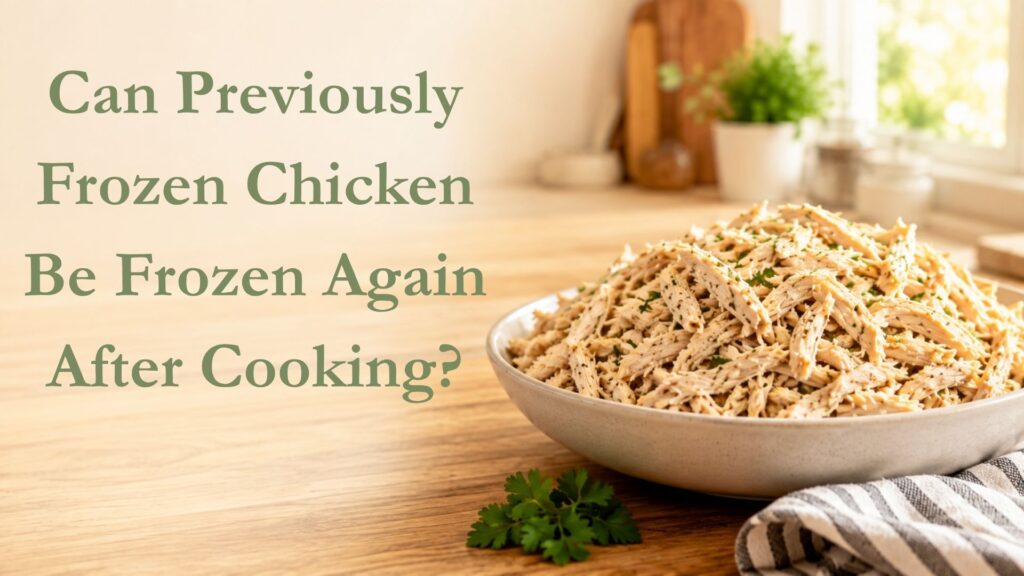
For shredded chicken, the main quality issue is moisture. Each freeze, thaw, cook, and reheat cycle can change how much water remains within the muscle fibers, so storing the chicken with a small amount of cooking liquid can help protect the texture.
This makes freezing cooked portions a practical final step after cooking frozen chicken for shredding, particularly when a large batch is being divided for future meals.
Previously Frozen Raw Chicken Can Become Frozen Cooked Chicken
The chicken may begin frozen, be thawed or cooked directly from frozen, and then become a completely cooked product. Once cooked, it can be cooled and stored as cooked chicken.
The important distinction is safe temperature control throughout the process rather than the simple fact that the chicken has been frozen before.
A Practical Freezer-to-Freezer Workflow
- Start with frozen chicken that has been stored appropriately.
- Thaw safely when required by the cooking method, or cook from frozen using an appropriate method.
- Cook until the thickest section reaches at least 165°F (74°C).
- Rest briefly and shred while warm.
- Divide the chicken into meal-size portions.
- Cool the cooked chicken promptly.
- Transfer it to freezer-suitable airtight containers or bags.
- Freeze portions that will not be used during the immediate refrigerated-storage period.
Why Cooking Changes the Storage Stage
Raw and cooked chicken are different storage stages. Once heat has fully cooked the meat, you are handling a cooked food rather than returning the same raw product to the freezer unchanged.
That makes batch cooking useful: one package of frozen raw chicken can become several portions of cooked shredded chicken intended for separate future meals.
When You Should Not Refreeze It
Do not treat cooking as a way to correct questionable storage. If chicken has spent excessive time at unsafe temperatures or there is uncertainty about how it was handled, freezing the cooked product does not undo that history.
Freezing slows microbial activity but is not a reset button for food that has already been mishandled.
Can Chicken Cooked Directly From Frozen Be Frozen Again?
Yes, once it has been fully cooked and handled properly afterward. The chicken does not need to have passed through a separate thawing stage before cooking in order for the cooked portions to be frozen.
Direct-from-frozen cooking may release substantial liquid, so drain excessive free water before portioning the shredded chicken.
How Moisture Changes During Repeated Freezing
Water inside chicken can form ice crystals during freezing. When the meat thaws again, some of that moisture can move out of the tissue.
Cooking adds another moisture-loss stage because heat tightens muscle proteins. Freezing the cooked chicken again can therefore produce a slightly drier texture after the next thaw and reheat.
How to Protect Shredded Chicken Texture
- Do not overcook before freezing: start with moist shredded chicken.
- Freeze meal-size portions: thaw only what you need.
- Use airtight packaging: reduces surface drying in the freezer.
- Add a small amount of broth if needed: lightly moist strands generally reheat better.
- Avoid repeated thaw-and-freeze cycles: quality tends to decline with extra handling.
Should You Freeze the Chicken Before or After Shredding?
Shredding before freezing is convenient because portions can move directly into soups, tacos, casseroles, wraps, or reheated meal-prep dishes.
Whole cooked pieces can retain slightly less exposed surface area, but they require another preparation step after thawing. For efficiency, shredded portions are usually easier.
Drain Excess Liquid Before Freezing
A little moisture is useful, but chicken should not be packaged in a large pool of watery cooking liquid unless you intentionally want it stored in broth.
Using the same approach as draining frozen chicken before shredding gives you more control: remove excess free water first, then add back only enough broth to keep the strands lightly moist.
Best Packaging for Shredded Chicken
| Packaging approach | Best use | Advantage | Trade-off |
|---|---|---|---|
| Freezer bag | Flat meal-size portions | Saves space and thaws quickly | Needs careful sealing |
| Airtight container | Moist shredded chicken | Protects shape | Takes more freezer space |
| Small portion containers | Individual meals | Easy portion control | More containers required |
Freeze in Useful Portions
Portion the chicken according to how it will actually be used later. One- or two-cup portions work well for many household meals, while professional or large-family prep may use larger weighed portions.
Smaller packages also thaw faster and reduce the temptation to thaw a large batch when only part is needed.
How to Use It After the Next Thaw
Thaw the cooked chicken safely, then reheat only as much as needed for the meal. Gentle reheating with a small amount of broth, sauce, or cooking liquid can help compensate for moisture lost during storage.
If the chicken was frozen as cooked pieces rather than shreds, shredding chicken after thawing is easier after it has been warmed enough for the chilled muscle fibers to soften.
Best Uses for Refrozen Cooked Chicken
- Soup: broth helps restore moisture during reheating.
- Tacos: reheat with a little sauce or seasoned liquid.
- Casseroles: surrounding sauce protects the shreds from drying.
- Meal prep: portioned frozen chicken reduces later preparation time.
- Enchiladas: soft reheated shreds mix easily with sauce.
Common Refreezing Mistakes
- Freezing one very large batch: smaller portions are easier to thaw and use.
- Packaging chicken while it is still releasing heavy steam: cool it appropriately before freezer storage.
- Freezing overly dry chicken: the next thaw and reheat can make dryness more noticeable.
- Keeping excessive watery liquid in the package: use controlled moisture instead.
- Using freezing to compensate for questionable handling: safe storage history still matters.
Best Working Rule
Previously frozen raw chicken can be fully cooked, shredded, cooled appropriately, and frozen as cooked chicken for later meals. Package it in useful portions, retain only enough liquid to keep the strands lightly moist, and avoid unnecessary repeated thaw-and-freeze cycles when good texture is the priority.