
"As an Amazon Associate, I earn from qualifying purchases. This helps support this site at no extra cost to you."
Chicken thighs usually produce moister, richer, and more forgiving pulled chicken, while chicken breast produces leaner, firmer, and more neutral-tasting shreds. Neither cut is automatically better; the useful choice depends on the texture, fat level, flavor, and cooking method you want.
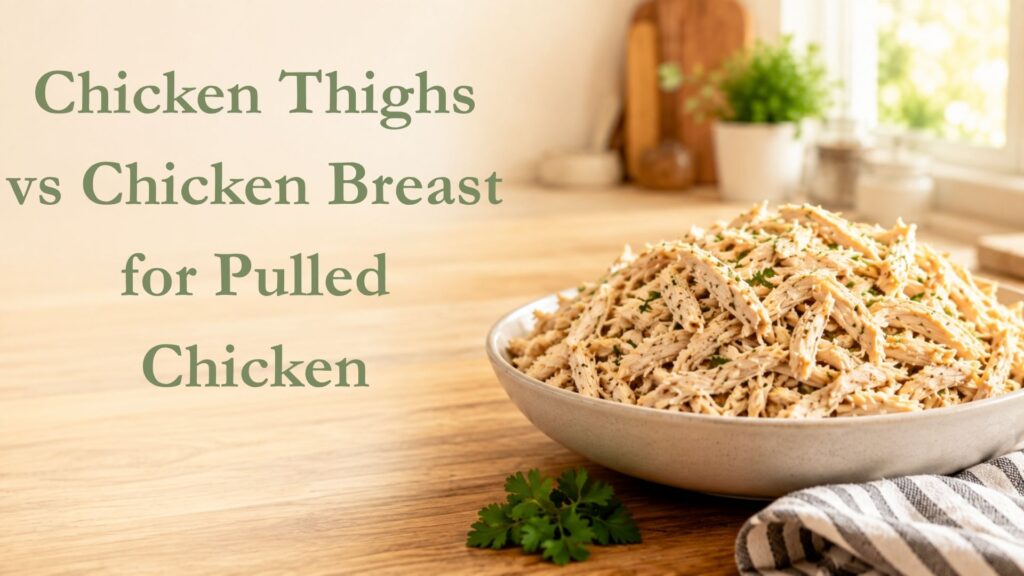
Thigh meat contains more fat and connective tissue, so it generally remains tender through a wider cooking window. Breast meat is leaner and can produce clean, distinct strands, but it becomes dry more quickly when overcooked.
When dark meat is the preferred texture, correctly cooking chicken thighs for shredding helps soften connective tissue without letting the meat become greasy or excessively soft.
Chicken Thighs and Breast Compared
| Factor | Chicken thighs | Chicken breast |
|---|---|---|
| Typical moisture | Higher | Lower |
| Fat level | Higher | Lower |
| Shredded texture | Soft, substantial strands | Firm, clean strands |
| Cooking forgiveness | Higher | Lower |
| Flavor | Richer | Milder |
| Grease risk | Higher | Lower |
| Best fit | Tacos, BBQ, sandwiches, sauced dishes | Salads, soups, wraps, casseroles |
Why the Two Cuts Shred Differently
Both breast and thigh meat consist of muscle fibers grouped into bundles, but the muscles perform different jobs in the bird. Thigh muscles are used more actively and contain more connective tissue, myoglobin, and fat than breast muscle.
During cooking, heat tightens the muscle proteins in both cuts. Connective tissue also softens with sufficient heat and time. In thighs, the additional fat and connective tissue help the meat remain succulent while the bundles loosen.
Breast meat contains less fat and connective tissue. Once its proteins tighten substantially and moisture leaves the fibers, there is less internal fat available to soften the eating texture.
Which Cut Is Easier to Shred?
Properly cooked thighs often require less force because their connective tissue has softened and their fibers remain moist. A fork can usually pull the meat apart with little resistance.
Breast also shreds easily when warm and properly cooked, but the useful window is narrower. If it is undercooked, the fibers resist separation. If it is significantly overcooked, they separate but feel dry and stringy.
Which Produces Better Pulled-Chicken Texture?
For pulled chicken served with barbecue sauce, taco seasoning, or another strong sauce, thighs often provide the softer and richer texture people associate with pulled meat.
Breast works better when you want individual strands to remain more distinct, especially in dishes where the chicken is mixed with lighter dressings, broths, or vegetables.
Tool Choice for Thighs Versus Breast
| Tool | Thigh result | Breast result | Approximate time | Main drawback |
|---|---|---|---|---|
| Hands | Soft, coarse strands | Long, clean strands | 2 to 5 minutes | Chicken must cool enough to handle |
| Two forks | Medium, irregular strands | Medium, distinct strands | 3 to 8 minutes | More effort |
| Hand mixer | Fine and very soft | Fine and fluffy | 30 to 60 seconds | Easy to over-shred both cuts |
| Stand mixer | Fine to medium | Fine to medium | 30 to 90 seconds | Extra cleanup |
| Shredder bowl | Short, tender strands | Short, firmer strands | 30 to 90 seconds | Texture can become too short |
Thighs Are More Forgiving of Longer Cooking
Thigh meat can usually tolerate more cooking before becoming unpleasantly dry. Its fat and connective tissue create a broader window between fully cooked and noticeably dried out.
Breast needs tighter temperature control. Carryover cooking continues briefly after it leaves the heat, so leaving breast in the pot or oven several unnecessary minutes can tighten the fibers further and drive out more moisture.
Breast Has an Advantage When You Want Leaner Shreds
Chicken breast is useful when the final dish already contains substantial fat from mayonnaise, cheese, cream, avocado, oil, or another rich ingredient. Its relatively lean profile can keep the finished mixture from becoming heavy.
Thigh meat contributes more rendered fat. That can be useful in tacos and pulled-chicken sandwiches, but excess fat may need to be drained when the dish requires cleaner strands.
When Thigh Meat Can Become Too Greasy
Greasy shredded thighs usually result from combining the meat with too much rendered fat, soft skin, or oily cooking liquid rather than from the muscle fibers alone.
Shredding the meat in a clean bowl and adding cooking juices back gradually gives better control. This is especially helpful when trying to keep shredded chicken thighs from becoming greasy.
Best Cut by Use Case
| Dish | Better starting choice | Reason |
|---|---|---|
| BBQ pulled chicken | Thighs | Moist texture handles sauce well |
| Tacos | Thighs or mixed | Rich meat stays tender after reheating |
| Chicken salad | Breast or mixed | Cleaner strands balance dressing |
| Soup | Breast or mixed | Firm strands hold structure |
| Meal prep | Mixed or thighs | Good reheating tolerance |
| Casseroles | Either | Both distribute well when medium-shredded |
Can You Use Both Together?
Using both cuts can balance the moisture of thighs with the firmer texture of breast. The main challenge is cooking them so neither cut is compromised, since breasts and thighs may reach their best texture at different times.
For batch cooking, mixing chicken breast and thigh meat for shredding can work especially well when you want a middle ground between lean and rich pulled chicken.
Best Practical Choice
Choose thighs when you want moist, rich, forgiving pulled chicken for tacos, sandwiches, barbecue, or reheated meal prep. Choose breast when you want leaner, firmer strands for salads, soups, wraps, or lighter dishes. Use a mixture when you want the moisture advantage of dark meat without making the entire batch as rich as all-thigh chicken.