
"As an Amazon Associate, I earn from qualifying purchases. This helps support this site at no extra cost to you."
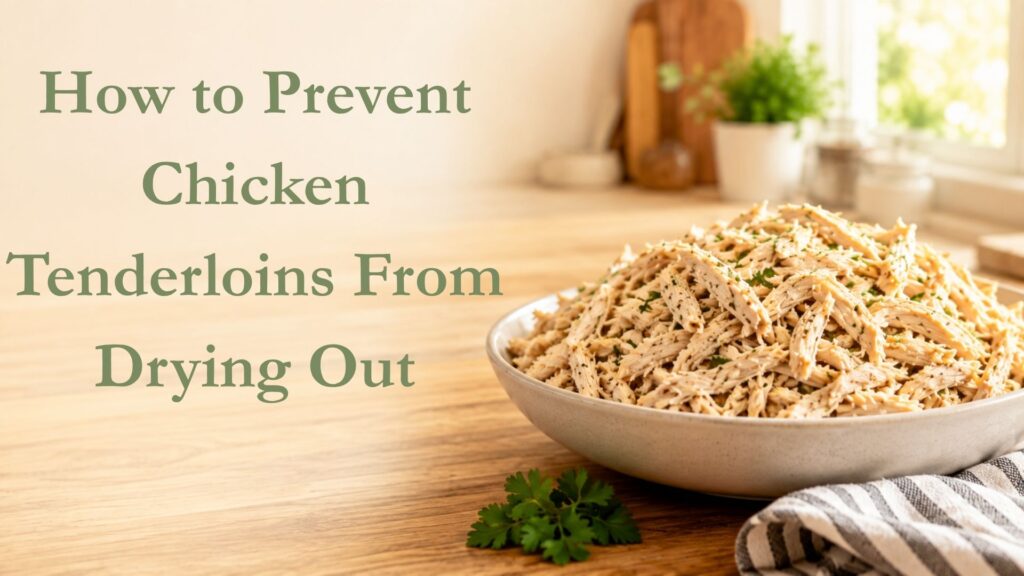
The best way to prevent chicken tenderloins from drying out is to cook them only until they are fully done, remove smaller pieces as soon as they finish, rest them briefly, and shred while still warm. Tenderloins are thin and lean, so a few extra minutes of heat can make a noticeable difference.
Moisture loss happens because heat tightens muscle proteins and pushes water from the fibers. Tenderloins have little internal fat to soften that effect, so timing matters more than prolonged tenderizing.
The foundation is controlled cooking for shredded tenderloins, where the goal is full doneness without extending the heating stage beyond what the small pieces need.
Why Tenderloins Dry Out So Quickly
Chicken tenderloins are small strips of lean breast muscle. Their thin shape means heat reaches the center rapidly, but it also means the entire piece can become overcooked quickly.
Once the proteins have tightened enough for the meat to be fully cooked, continued heating causes additional contraction and moisture loss.
The Main Causes of Dry Tenderloins
| Cause | What happens | Better approach |
|---|---|---|
| Cooking too long | Fibers tighten and lose moisture | Start checking early |
| Using breast timing | Small pieces stay on heat too long | Use tenderloin-specific timing |
| Very high heat | Thin edges dry first | Use controlled heat |
| Leaving cooked pieces in hot liquid | Carryover cooking continues | Remove finished pieces promptly |
| Long hot holding | Moisture keeps leaving the fibers | Keep holding time short |
Start Checking Before the Maximum Time
Cooking ranges are useful for deciding when to begin checking, not for deciding that every tenderloin must remain on the heat until the final minute.
If a batch contains noticeably different sizes, remove smaller pieces first while the thicker ones continue cooking.
Choose the Right Heat Level
Gentle simmering gives better control than a violent rolling boil. Moderate oven temperatures give a wider timing window than extremely high heat.
Under pressure or in a slow cooker, control comes from limiting time rather than reducing surface heat because the meat is enclosed in a hot, moist environment.
Do Not Wait for Tenderloins to Fall Apart
Tenderloins do not need to disintegrate during cooking before they can be shredded. Once fully cooked, their muscle fibers will usually separate with very little force.
Waiting until the pieces collapse can give you softer meat, but it also increases the risk of dry, stringy fibers or very fine fragments.
Rest Briefly, Not Excessively
A rest of about 3 to 5 minutes is generally enough for tenderloins. That allows heavy steaming to subside while keeping the fibers warm and easy to separate.
Because the pieces are small, they cool much faster than whole breasts. A long rest can leave them cold and firm before shredding begins.
How to Shred Without Losing More Moisture
- Remove the tenderloins as soon as they are fully cooked.
- Rest them for about 3 to 5 minutes.
- Transfer them to a clean bowl rather than leaving them in very hot cooking liquid.
- Shred using forks or hands for maximum texture control.
- Stop once the desired strand size is reached.
- Add a small amount of reserved cooking liquid if the surface looks dry.
How Tool Choice Affects Dryness
| Tool | Approximate time | Moisture control | Main drawback |
|---|---|---|---|
| Hands | 1 to 3 minutes | Excellent | Needs cooling first |
| Two forks | 2 to 4 minutes | Excellent | More effort |
| Hand mixer | 20 to 45 seconds | Moderate | Creates many exposed surfaces quickly |
| Stand mixer | 20 to 45 seconds | Moderate | Easy to over-process |
| Shredder bowl | 30 to 60 seconds | Good | Can make very short strands |
Mechanical shredding is useful for speed, but the small pieces need very little processing. When using a mixer, stop as soon as the meat separates rather than waiting for a completely uniform texture.
This is particularly important when shredding chicken tenderloins with a mixer, because the combination of small pieces and fast beaters can turn moist strands into fine fragments in seconds.
What if Tenderloins Are Already Dry?
- Slightly dry: add 1 to 2 tablespoons of warm reserved cooking liquid and toss gently.
- Dry and stringy: use in a sauced dish where moisture can coat the fibers.
- Very finely shredded: fold into casseroles, fillings, soups, or chicken salad rather than continuing to process it.
- Chilled and firm: warm gently with a small amount of moisture before serving.
Fresh vs Frozen Tenderloins
Frozen tenderloins require more time for the center to heat through, so the exterior can spend longer exposed to heat. Individually frozen pieces are easier to manage than a solid frozen block.
The moisture-control difference between fresh and frozen chicken tenderloins matters most when using fast cooking methods where a few extra minutes can change texture quickly.
Best Method by Cooking Style
| Method | Best moisture-control habit |
|---|---|
| Boiling or simmering | Use a gentle simmer and remove pieces promptly |
| Baking | Start checking before the upper time range |
| Pressure cooking | Use short pressure and release times |
| Slow cooking | Do not leave lean tenderloins cooking all day |
Best Practical Rule
Prevent dry tenderloins by treating cooking time as a maximum to manage rather than a target to extend. Check early, remove finished pieces promptly, rest for 3 to 5 minutes, and shred while warm. If moisture is needed afterward, add a small amount of cooking liquid rather than trying to correct dryness with extra cooking.