
"As an Amazon Associate, I earn from qualifying purchases. This helps support this site at no extra cost to you."
To cook chicken until it falls off the bone, use gentle, sustained moist heat long enough for connective tissue around the bones and joints to soften substantially. Slow cooking, covered braising, gentle simmering, and pressure cooking are the most practical methods.
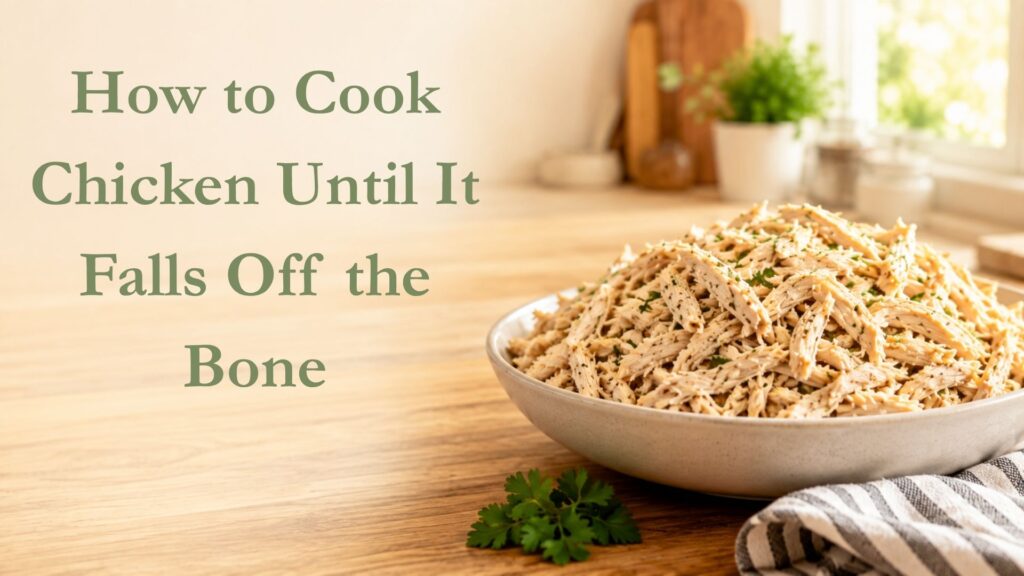
The chicken must first become fully cooked, but fall-off-the-bone texture usually requires additional controlled heating beyond the point where the meat is simply done. The goal is to soften structural tissue without drying the muscle fibers or turning the meat into mush.
This is one end of the texture range within cooking bone-in chicken for easy shredding, where the meat may be removed earlier if you want firmer, more distinct strands.
What Makes Chicken Fall Away From the Bone?
Muscle does not simply sit loosely around chicken bones. Connective tissues, tendons, and joint structures hold the meat in place.
During prolonged cooking, these structures soften. At the same time, the muscle proteins tighten and lose some moisture. Good fall-off-the-bone cooking balances those two processes: enough time for connective tissue to weaken, but not so much aggressive heat that the meat becomes dry.
Best Methods for Fall-Off-the-Bone Chicken
| Method | Typical texture | Speed | Main drawback |
|---|---|---|---|
| Slow cooker | Very soft and moist | Slow | Easy to over-soften |
| Pressure cooker | Very soft quickly | Fast | Small timing changes affect texture |
| Gentle simmer | Soft, controlled | Moderate | Needs monitoring |
| Covered braise | Soft with concentrated flavor | Moderate | Longer oven or stovetop time |
| Dry roasting | Can soften but dries more easily | Moderate | Less forgiving for pulled texture |
Best Cuts for Fall-Off-the-Bone Texture
Thighs, drumsticks, legs, and quarters are usually better suited to extended cooking than lean breast meat. They contain more connective tissue and, particularly in dark meat, more fat.
Bone-in breast can be cooked until it releases easily, but it has a narrower moisture window. By the time connective tissue has softened substantially, the breast muscle can become dry if the cooking environment is too hot.
Step-by-Step Fall-Off-the-Bone Method
- Choose bone-in thighs, legs, quarters, or another cut suited to longer cooking.
- Arrange the pieces in a pot, slow cooker, pressure cooker, or covered baking vessel.
- Add enough suitable cooking liquid to maintain a moist environment when the method requires it.
- Use moderate heat rather than aggressive boiling.
- Cook until the chicken is fully done.
- Continue controlled cooking until the connective tissue around the bone offers very little resistance.
- Test by lifting or pulling gently near a joint.
- Remove the chicken once the meat releases easily but still has the strand texture you want.
- Rest briefly before deboning and shredding.
How to Know When It Is Ready
- The chicken is fully cooked.
- Meat near the joints pulls away with little pressure.
- The main bone can often be exposed with a fork or tongs.
- Connective tissue feels soft rather than rubbery.
- The meat still forms visible fibers rather than turning completely pasty.
The progression from cooked to easily released meat is the same structural change that determines when chicken starts pulling away from the bone.
Why a Hard Boil Is Not Better
Violent boiling increases surface agitation and exposes the meat to aggressive heat without making connective tissue softening fundamentally more controlled.
A gentle simmer gives heat time to move through the meat while limiting unnecessary moisture loss from the exterior.
How Slow Cooking Changes the Texture
Slow cooking gives connective tissue a long period to soften while keeping the meat in a moist environment. This is one of the easiest ways to achieve very soft bone-in chicken.
The drawback is that breast meat and small pieces can eventually pass beyond easy shredding into dry or overly soft fibers if held for too long.
How Pressure Cooking Changes the Texture
Pressure cooking accelerates heating and connective-tissue softening. Bone-in thighs and quarters can move from firm to very soft in a relatively short cooking cycle.
The trade-off is a narrower timing window. A few extra minutes can make the meat much softer than intended.
Fall-Off-the-Bone vs Ideal Shredding Texture
Chicken does not have to literally fall from the bone to shred well. In many cases, the best pulled texture occurs slightly earlier, when the bone releases with light pressure but the muscle fibers still retain definition.
| Texture stage | Bone release | Shred result |
|---|---|---|
| Just fully cooked | Moderate resistance | Firm strands |
| Easy release | Low resistance | Ideal controlled shreds |
| Fall-off-the-bone | Very low resistance | Very soft pulled meat |
| Over-softened | Almost none | Fibers may collapse or become mushy |
What to Do After Cooking
Rest the chicken briefly so handling becomes easier, then remove the main bones before shredding. Even very soft meat should still be inspected for cartilage, tendon pieces, and small fragments.
If the batch is intended for tacos, sandwiches, or pulled chicken, use hands or forks to preserve larger strands.
Can Chicken Legs Reach This Texture?
Yes. Chicken legs are well suited to long moist cooking because dark meat tolerates extended heat better than lean breast.
Once the meat has softened sufficiently, cooked chicken legs can be shredded into moist pulled strands, although drumstick tendons and joint structures still need to be removed.
Common Mistakes
- Using high heat to speed the process: the exterior can dry before connective tissue has softened properly.
- Using breast and thigh timing interchangeably: lean and dark meat tolerate extended cooking differently.
- Waiting until the meat completely disintegrates: ideal shredding texture often occurs earlier.
- Skipping bone inspection: soft meat can still contain cartilage or small fragments.
- Overusing a mixer afterward: already-soft meat can turn very fine within seconds.
Best Practical Rule
Use gentle, moist heat and cook until the meat releases from the bone with very little force. For shredding, stop before the muscle fibers completely lose their structure.
Thighs, legs, and quarters are the easiest cuts for this texture because their connective tissue and fat provide a wider useful cooking window.