
"As an Amazon Associate, I earn from qualifying purchases. This helps support this site at no extra cost to you."
Chicken can be poached either covered or uncovered, but a partially covered or fully covered pot usually gives steadier heat and reduces evaporation. The important part is not the lid itself. It is keeping the poaching liquid hot and calm rather than letting it reach a rolling boil.
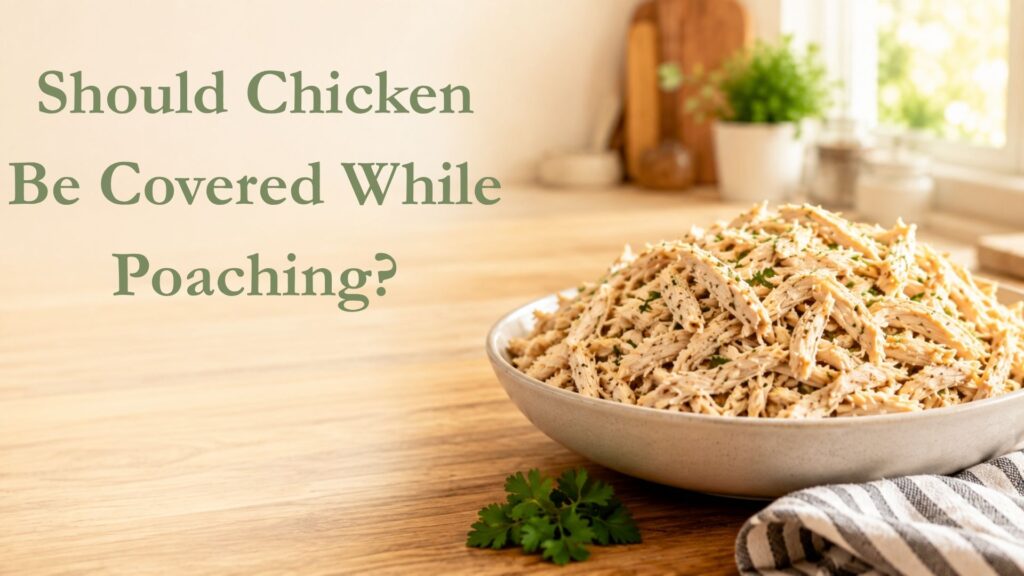
A controlled poaching method for chicken that will be shredded works by transferring gentle heat from the liquid into the meat. Covering the pot slows heat loss from the surface, so the burner often needs to be reduced once the liquid reaches the correct range.
What the Lid Changes During Poaching
A lid traps heat and steam above the liquid. Less energy escapes into the kitchen, so the temperature inside the pot tends to rise faster and remain more stable.
That can be useful, but it also means a covered pot can move from gentle poaching to simmering or boiling if the burner remains too high. The best temperature for poaching chicken still matters whether the lid is on or off.
Covered Versus Uncovered Poaching
| Method | Heat retention | Evaporation | Temperature control | Main drawback |
|---|---|---|---|---|
| Fully covered | High | Low | Stable once adjusted | Easy to overshoot temperature |
| Partially covered | Moderate to high | Moderate | Easy to monitor | Requires occasional adjustment |
| Uncovered | Lower | Higher | Very visible | More heat and liquid loss |
Why Partial Covering Is Often Practical
Leaving the lid slightly offset gives you some of the heat-retention benefit of a covered pot while making the liquid easier to watch. You can see whether bubbles are becoming too active without removing the lid completely every few minutes.
This approach is especially useful when you are learning how your burner and saucepan behave. Once the liquid reaches poaching temperature, reduce the heat and adjust the lid so the surface remains calm.
How Covering Affects Liquid Level
An uncovered pot loses water through evaporation. During a short chicken-breast poach, the loss may be modest, but it becomes more noticeable with larger batches or longer cooking times.
A lid keeps more moisture inside the pot, which helps maintain the amount of liquid needed to poach chicken without topping it up during cooking.
Step-by-Step Covered Poaching Method
- Arrange the chicken in a saucepan in one layer where practical.
- Add enough water or broth to surround and cover the chicken.
- Place the lid on the pot and begin heating over medium heat.
- As the liquid becomes hot, reduce the burner before vigorous bubbling develops.
- Leave the lid fully or partially on while maintaining gentle poaching heat.
- Check the chicken near the lower end of its expected cooking range.
- Remove the chicken once the thickest section reaches a safe internal temperature.
- Rest for about 5 minutes before shredding.
For average boneless breasts, the active poaching period commonly takes around 12 to 18 minutes after the liquid reaches the proper temperature.
Do You Need to Lift the Lid Frequently?
No. Repeatedly removing the lid releases heat and makes the pot temperature fluctuate. Check occasionally rather than continuously.
If you are using a transparent lid, you can monitor the amount of bubbling without opening the pot. If the liquid becomes visibly active, reduce the heat.
How the Lid Affects Chicken Texture
The lid does not directly make chicken tender. Texture depends on how much heat reaches the muscle fibers and how long they remain exposed to it.
Chicken proteins tighten as they heat. If covering the pot causes the liquid to become too hot, the meat may lose more moisture. If the covered pot is held at a gentle temperature, the lid can actually help provide a more stable cooking environment.
Best Covering Approach by Situation
| Situation | Best approach | Reason |
|---|---|---|
| One or two chicken breasts | Partially covered | Easy heat control |
| Large batch | Covered, then adjusted | Reduces heat loss |
| Very responsive burner | Partially covered or uncovered | Prevents temperature overshoot |
| Longer bone-in poach | Mostly covered | Reduces evaporation |
Common Lid Mistakes
- Covering the pot and leaving the burner high: trapped heat can quickly turn poaching into boiling.
- Removing the lid every minute: this creates unnecessary temperature swings.
- Assuming covered means moist: chicken can still become dry if the temperature is too high.
- Ignoring evaporation when uncovered: exposed chicken may appear as the liquid level drops.
Best Working Approach
For most stovetop poaching, keep the pot partially or fully covered after the liquid reaches temperature, then lower the burner enough to maintain calm heat. The lid should help stabilize the environment, not turn the pot into a hard simmer.