
"As an Amazon Associate, I earn from qualifying purchases. This helps support this site at no extra cost to you."
Chicken tenderloins generally need about 2 to 3 hours on LOW or roughly 1 to 2 hours on HIGH in a slow cooker when the goal is moist shredded chicken. Tenderloins are much smaller and leaner than thighs, so they usually do not benefit from the very long slow-cooker times often used for tougher cuts.
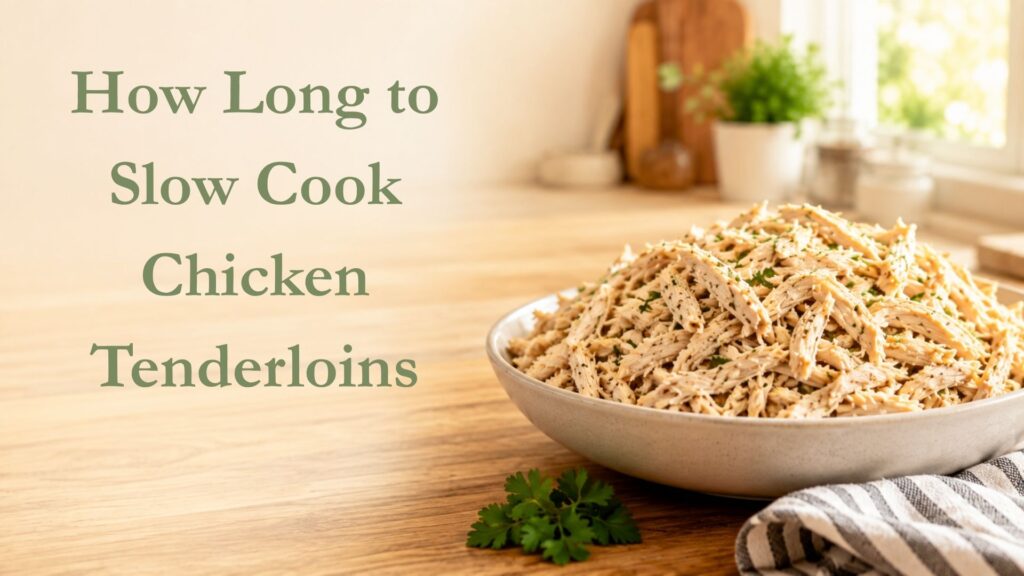
The main risk is leaving them hot for several hours after they are already fully cooked. Extended heating keeps tightening the muscle proteins and can turn the finished shreds dry, stringy, or excessively soft.
The general approach to cooking chicken tenderloins for shredding still applies in a slow cooker: use enough moisture to prevent surface drying, check earlier than you would with breasts or thighs, and remove the meat once it is ready.
Slow-Cooker Times for Chicken Tenderloins
| Setting | Approximate time | Expected result | Main risk |
|---|---|---|---|
| LOW | 2 to 3 hours | Soft, moist strands | Drying if held too long |
| HIGH | 1 to 2 hours | Fast, tender shreds | Narrower timing window |
| Warm setting after cooking | Keep as short as practical | Maintains serving temperature | Continued moisture loss |
| Frozen tenderloins | Not ideal for slow-cooker timing | Less predictable heating | Uneven temperature progression |
Slow cookers vary substantially in actual temperature, crock size, fill level, and heating pattern, so these ranges are starting points rather than fixed guarantees.
Why Tenderloins Need Shorter Slow-Cooker Times
Tenderloins are thin strips of breast muscle. Their small size means heat reaches the center relatively quickly, even when the appliance operates at lower temperatures than an oven or pressure cooker.
Unlike tougher cuts with large amounts of connective tissue, tenderloins do not need hours of cooking to become shred-friendly. Once the meat is fully cooked, the fibers already separate with relatively little force.
How Slow Cooking Changes the Fibers
As tenderloins heat, their proteins tighten and moisture moves through the meat. The humid slow-cooker environment reduces surface drying, but it does not stop internal moisture loss caused by prolonged protein contraction.
This is why a tenderloin can sit in liquid and still become stringy. The surrounding sauce may be wet while the muscle fibers themselves have tightened and lost moisture.
How to Slow Cook Tenderloins for Shredding
- Arrange fresh tenderloins in the slow cooker in a relatively even layer.
- Add enough sauce, broth, or other cooking liquid to create a moist environment without completely drowning the meat unless the dish requires it.
- Season according to the final use.
- Cook on LOW and begin checking around 2 hours, or on HIGH and begin checking around 1 hour.
- Check the thickest pieces for full doneness.
- Remove the chicken once cooked instead of automatically continuing to the maximum time.
- Rest for about 3 to 5 minutes if the meat is heavily steaming.
- Shred and add only as much cooking liquid back as needed for the intended texture.
LOW vs HIGH for Shredded Tenderloins
| Factor | LOW | HIGH |
|---|---|---|
| Cooking speed | Slower | Faster |
| Timing margin | Wider | Narrower |
| Hands-off convenience | Good | Good |
| Risk of rapid overcooking | Lower | Higher |
| Best use | More controlled batch cooking | Shorter meal-prep window |
LOW generally gives you more flexibility, but tenderloins still should not be treated like a cut that requires an all-day cook.
Do Tenderloins Need to Fall Apart in the Slow Cooker?
No. They are ready for shredding once fully cooked and tender enough for the fibers to separate easily. Waiting until they disintegrate under a spoon usually means you have gone past the point needed for controlled strands.
For tacos and wraps, removing the pieces while they still hold their shape gives better medium shreds. Very soft chicken can work for sauced fillings or casseroles where strand definition matters less.
Slow Cooking vs Pressure Cooking
A slow cooker trades speed for hands-off convenience. A pressure cooker reaches a tender shredding texture much faster but gives less opportunity to check the meat during cooking.
When time is limited, pressure cooking chicken tenderloins can reduce the cooking stage to only several minutes under pressure, while slow cooking is more useful when you want the appliance working unattended for a short block of time.
How to Keep Slow-Cooked Tenderloins From Drying Out
- Check early: tenderloins cook much faster than thighs.
- Use some cooking liquid: a humid environment limits surface drying.
- Do not leave them on WARM for hours: continued heat can still tighten the fibers.
- Shred after cooking: leaving already shredded meat in hot liquid increases exposed surface area.
- Add liquid back selectively: use enough for moisture without turning the chicken watery.
These controls are closely related to preventing chicken tenderloins from drying out, especially because their lean muscle has less internal fat to soften the texture after extended cooking.
Best Tools for Slow-Cooked Tenderloins
| Tool | Approximate time | Texture | Main drawback |
|---|---|---|---|
| Two forks | 1 to 3 minutes | Medium | Requires some hand effort |
| Hands | 1 to 3 minutes | Coarse | Chicken must cool enough to handle |
| Hand mixer | 15 to 40 seconds | Fine | Soft slow-cooked meat can over-shred immediately |
| Stand mixer | 15 to 40 seconds | Fine to medium | Easy to make the meat too fine |
Best Uses for Slow-Cooked Tenderloins
- Tacos: medium shreds mix easily with sauce.
- Sandwiches: slightly coarse shreds retain texture under dressing or barbecue sauce.
- Casseroles: finer shreds distribute evenly.
- Meal prep: a short LOW cook can prepare several portions with little active work.
Best Practical Time
For fresh chicken tenderloins, start checking at about 2 hours on LOW or 1 hour on HIGH. Many batches finish within roughly 2 to 3 hours on LOW or 1 to 2 hours on HIGH. Remove the chicken once fully cooked rather than treating tenderloins as an all-day slow-cooker cut.