
"As an Amazon Associate, I earn from qualifying purchases. This helps support this site at no extra cost to you."
Yes. Frozen chicken can be baked without thawing first and then shredded once fully cooked. Expect it to take roughly 50 percent longer than comparable thawed chicken, although thickness matters more than one fixed time. The thickest section should reach at least 165°F (74°C) before the chicken is removed and shredded.
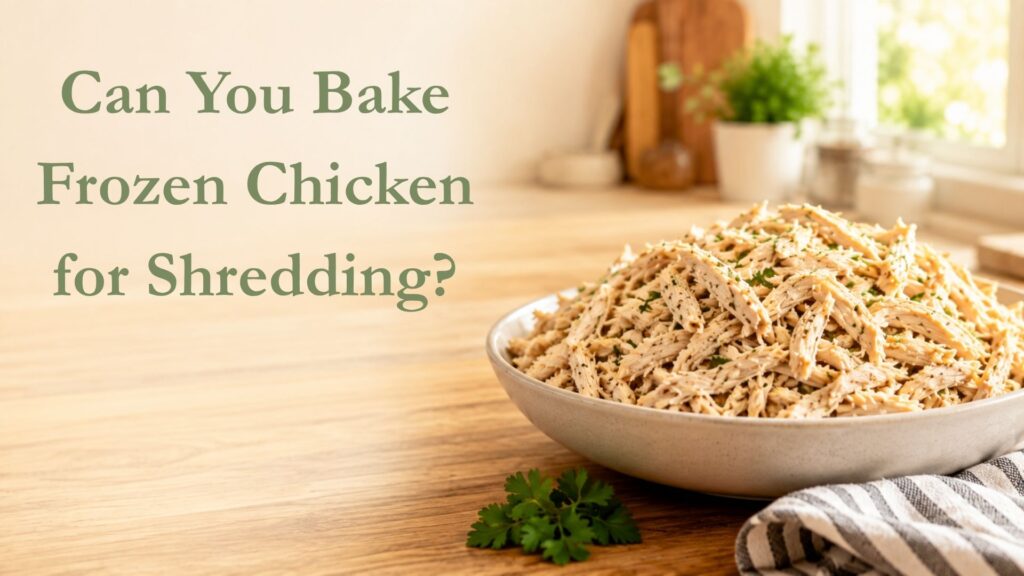
Baking produces firmer, more defined strands than many moist cooking methods. The trade-off is that the exterior can lose moisture while the frozen center is still heating, so covered baking or adding a small amount of liquid can help with very thick pieces.
Oven cooking is one practical route within cooking frozen chicken for shredding when you want minimal stovetop monitoring and a more roasted texture than simmering provides.
How Baking Frozen Chicken Works
Hot oven air and the baking surface begin heating the exterior immediately. The center, however, starts frozen and requires additional time for internal ice to melt before the meat can reach cooking temperature.
As the chicken heats, muscle proteins tighten and connective structures soften. Once the meat reaches full doneness, those cooked fiber bundles can be pulled apart into shreds.
How Long Frozen Chicken Takes in the Oven
| Frozen chicken | Approximate oven time | Main concern |
|---|---|---|
| Small boneless breast | 30 to 40 minutes | Can dry if very thin |
| Average boneless breast | 35 to 50 minutes | Thickness varies |
| Large thick breast | 45 to 60 minutes or more | Center heats slowly |
| Boneless thighs | 35 to 50 minutes | Soft texture develops with time |
| Bone-in pieces | 45 to 65 minutes or more | Irregular thickness and bone |
These are planning ranges rather than finish guarantees. Oven temperature, chicken thickness, pan material, batch size, and whether the pieces touch each other all affect the actual cooking time.
A Practical Oven Method
- Preheat the oven before adding the frozen chicken.
- Arrange individually frozen pieces in a single layer in a baking dish.
- Add seasoning and a small amount of broth or water if you want a moister cooking environment.
- Cover loosely for part of the cooking period if the exterior is drying before the center heats.
- Begin checking the thickest piece before the expected finish time.
- Continue baking until the thickest section reaches at least 165°F (74°C).
- Rest for about 5 minutes.
- Shred while the chicken remains warm.
Should You Cover Frozen Chicken While Baking?
Covering can reduce surface drying during the long heating period required by frozen chicken. Steam trapped inside the baking dish creates a more humid environment around the meat.
The trade-off is less browning. For chicken intended mainly for shredding, preserving moisture is usually more useful than developing a deeply browned surface.
Why Thick Frozen Breasts Need Extra Attention
A thick breast has a long distance between its hot exterior and frozen center. The outside can become fully cooked while the center remains below the target temperature.
This is why thickness creates a bigger timing difference than simple weight. Two breasts can weigh nearly the same while one is much thicker through the center.
Frozen Chicken Can Release Liquid in the Baking Dish
Do not be surprised if liquid pools around the chicken as it cooks. Some comes from melting surface ice, and more is released as heating muscle fibers tighten and push out moisture.
Understanding why previously frozen chicken can look watery after cooking helps separate two different issues: free liquid around the meat and moisture actually retained inside the cooked fibers.
Should You Drain the Chicken Before Shredding?
If the chicken comes out of the baking dish sitting in pooled liquid, transfer it to a clean plate or shallow bowl before shredding. Let excess liquid run off for 1 to 2 minutes.
Do not aggressively squeeze the meat dry. The goal is to remove surface liquid that would dilute a sauce or filling, not force additional moisture from the fibers.
Oven Baking Versus Simmering
| Factor | Baking | Simmering |
|---|---|---|
| Heat environment | Drier | Moist |
| Shred texture | Firmer and defined | Softer and moist |
| Monitoring | Low to moderate | Moderate |
| Surface drying risk | Higher | Lower |
| Cooking liquid | Small amount if used | Chicken is surrounded by liquid |
How to Shred Baked Frozen Chicken
Let the chicken rest for about 5 minutes after it reaches the target temperature. Warm meat separates more easily than chilled meat, while the short rest reduces heavy steaming.
| Tool | Time | Texture | Best fit | Drawback |
|---|---|---|---|---|
| Two forks | 2 to 5 minutes | Medium, defined | Tacos, salad, soup | More hand effort |
| Hands | 1 to 4 minutes | Coarse to medium | Wraps, tacos | Requires cooling |
| Hand mixer | 30 to 60 seconds | Fine | Casseroles | Can expose dry texture |
| Stand mixer | 20 to 60 seconds | Fine to medium | Bulk prep | Extra cleanup |
| Shredder bowl | 30 to 90 seconds | Short, controlled | Meal prep | Surface liquid should be drained first |
Baking Versus Slow Cooking Frozen Chicken
When the chicken is still frozen, a hot oven provides much faster initial heating than a slow cooker. The oven therefore gives you a more practical direct-from-frozen option.
By contrast, slow cooking frozen chicken for shredding is better avoided in favor of thawing first and then using the slow cooker.
Best Uses for Baked Shredded Chicken
- Chicken salad: firmer strands hold dressing well.
- Tacos: medium strands hold seasoning and sauce.
- Wraps: baked chicken works well when excess surface liquid is drained.
- Casseroles: fine to medium shreds distribute evenly.
- Meal prep: useful when several frozen pieces can bake together in one pan.
Common Baking Mistakes
- Using thawed-chicken timing: frozen pieces usually require substantially longer.
- Judging by surface color: the center can remain colder after the exterior looks cooked.
- Baking pieces frozen together: separated pieces heat more predictably.
- Ignoring pooled liquid: excess surface moisture can dilute the final dish.
- Leaving finished chicken in the oven: continued heat can dry the fibers.
Best Working Method
Bake individual frozen chicken pieces in a preheated oven, allow substantially more time than for thawed chicken, and begin checking before the upper end of the expected range. Confirm at least 165°F (74°C), let excess surface liquid drain if necessary, rest for about 5 minutes, and shred while warm.