
"As an Amazon Associate, I earn from qualifying purchases. This helps support this site at no extra cost to you."
Fresh and frozen chicken tenderloins can both be cooked for shredding, but fresh tenderloins cook faster and give you more predictable timing. Frozen tenderloins need additional heating time because the center must first thaw and warm before normal cooking progresses.
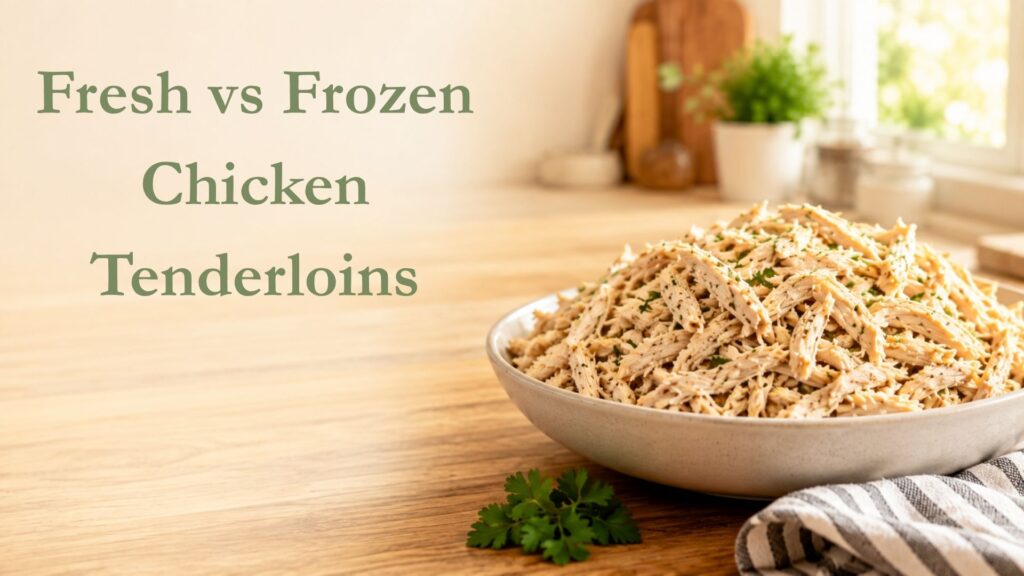
The final shredded texture can be very similar when both are cooked correctly. The main differences are cooking speed, moisture control, piece separation, and how accurately you can predict when each tenderloin will finish.
Whichever form you start with, the same principles for cooking chicken tenderloins for shredding apply: avoid unnecessary heat exposure and remove the pieces once fully cooked.
Fresh and Frozen Tenderloins Compared
| Factor | Fresh tenderloins | Frozen tenderloins |
|---|---|---|
| Cooking speed | Faster | Slower |
| Timing predictability | Higher | Lower |
| Piece separation | Easy | Can be difficult if frozen together |
| Moisture-control margin | Better | Outer meat cooks longer |
| Convenience | Requires timely use | Easy long-term storage |
Why Frozen Tenderloins Take Longer
Frozen chicken contains ice within and around the muscle tissue. Before the center can reach normal cooking temperatures, heat must first raise the frozen meat through the thawing range.
The outside therefore spends more time exposed to heat than it would with fresh chicken. If the cooking method is aggressive, the exterior can tighten and lose moisture before the center catches up.
Individually Frozen Pieces Are Easier to Cook
Separate frozen tenderloins are much easier to cook predictably than several pieces frozen into one solid block. Individual pieces allow heat or cooking liquid to reach more of the surface.
A thick frozen mass creates a colder center and prevents even circulation around each tenderloin.
Should You Thaw Tenderloins Before Cooking?
Thawing first usually gives better control. The pieces cook more evenly, finish faster, and can be removed individually as soon as they are done.
Cooking from frozen can still be practical when the tenderloins are individually separated and the method allows enough time for the center to heat fully.
Fresh vs Frozen by Cooking Method
| Method | Fresh tenderloins | Frozen tenderloins | Main consideration |
|---|---|---|---|
| Gentle simmer | Fast and easy to monitor | Needs additional time | Separate pieces as they loosen |
| Baking | Predictable | Longer cooking window | Outer edges may dry first |
| Pressure cooking | Very fast | Practical if individually frozen | No checking while sealed |
| Slow cooking | More predictable | Less desirable starting frozen | Slow heating complicates timing |
Frozen Tenderloins in a Pressure Cooker
Pressure cooking is one of the more practical methods for individually frozen tenderloins because the sealed high-temperature environment transfers heat rapidly.
Frozen pieces still need more time than fresh ones, which is why pressure-cooking tenderloins requires different timing based on their starting temperature.
How Freezing Can Affect Texture
Freezing forms ice crystals within the meat. After thawing and cooking, some liquid may be released more readily than from chicken that was never frozen.
For shredded chicken, this difference is usually less important than cooking control. Overcooking either fresh or frozen tenderloins has a much stronger effect on dryness than the starting state alone.
How to Cook Frozen Tenderloins More Evenly
- Use individually frozen pieces rather than a solid block whenever possible.
- Arrange them so heat can circulate around the pieces.
- Allow extra cooking time compared with fresh tenderloins.
- Check the thickest pieces rather than relying only on the clock.
- Remove any smaller pieces that finish first.
- Rest briefly and shred while still warm.
Which Is Better for Shredding?
Fresh tenderloins are easier when consistency and precise timing matter. Frozen tenderloins are useful for convenience and can still produce good shreds if their additional cooking requirement is respected.
The main texture problem with frozen pieces comes from leaving the exterior exposed to heat too long while waiting for the center. Controlled cooking helps prevent tenderloins from drying out regardless of whether they began fresh or frozen.
Best Choice by Situation
| Situation | Better option | Reason |
|---|---|---|
| Fast weeknight meal | Fresh | Shortest cooking time |
| Planned meal prep | Fresh or thawed | More predictable batch timing |
| Last-minute freezer meal | Frozen | No thawing required with suitable method |
| Precise texture control | Fresh | Easier to remove pieces individually |
| Long-term storage convenience | Frozen | Available when needed |
Best Practical Rule
Use fresh or thawed tenderloins when you want the most predictable cooking and shredding texture. Frozen tenderloins remain practical when separated individually and given additional cooking time. In either case, remove them promptly once done and shred while warm rather than extending the cooking stage unnecessarily.