
"As an Amazon Associate, I earn from qualifying purchases. This helps support this site at no extra cost to you."
Shredded chicken breaks down faster than whole cuts when reheated repeatedly. Once the muscle fibers are separated, more surface area is exposed, and each heat cycle pulls out additional moisture while tightening already-cooked proteins. The result isn’t just drier meat, it’s progressively weaker structure and narrower safety margins.
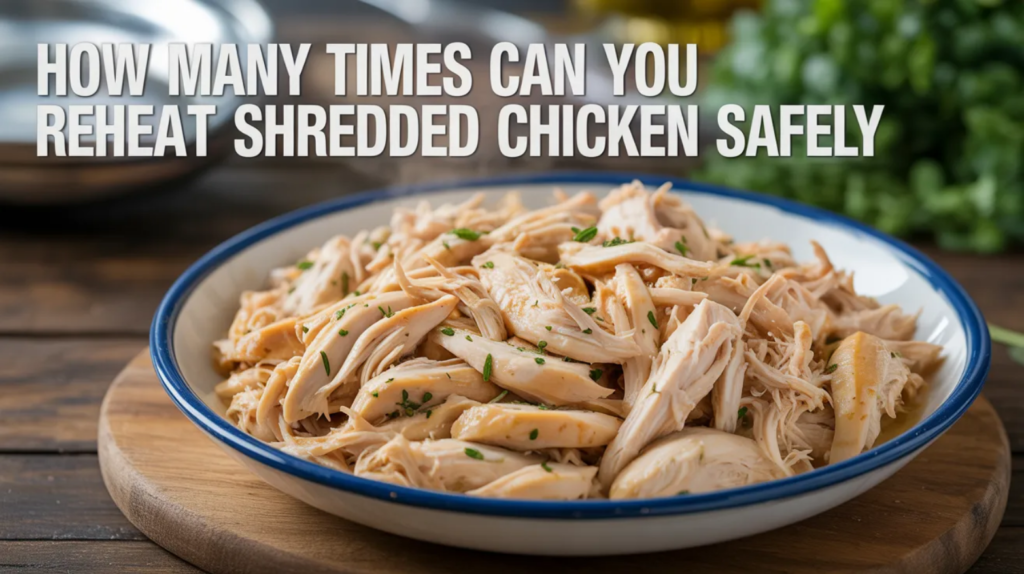
So how many times can you reheat shredded chicken safely without compromising quality? The answer depends less on a strict number and more on how the fibers respond to repeated heat exposure and handling. This guide explains what changes inside the meat with each cycle, how quality declines, and the practical limit for keeping shredded chicken both safe and usable.
1) What problem this solves
Repeated reheating is common in meal prep and food service, but shredded chicken degrades faster than whole cuts. Each reheat cycle strips moisture from already separated muscle fibers, increasing dryness, stringiness, and food safety risk if handling is sloppy.
The real question isn’t just safety, it’s quality survival.
Short answer:
One full reheat cycle is ideal. Two is usually acceptable. More than that sharply reduces texture quality and increases risk.
2) How reheating affects shredded chicken (mechanism first)
When chicken is first cooked:
- Muscle fibers tighten.
- Moisture is expelled.
- Connective tissue softens (more in thighs than breasts).
When you shred it, you increase surface area and expose more fiber ends. Every reheating cycle:
- Causes additional moisture loss.
- Tightens denatured proteins further.
- Breaks down structure at the strand edges.
- Reduces the protective effect of retained juices.
Shredded chicken has less internal moisture buffering than whole breasts or thighs. That makes it more sensitive to repeated heat exposure.
Texture progression across reheats:
| Reheat Cycle | Fiber Condition | Moisture Level | Texture Outcome |
|---|---|---|---|
| First reheat | Flexible | Mostly intact | Soft, usable strands |
| Second reheat | Noticeably drier | Reduced | Slightly firm, still workable |
| Third reheat | Tight, frayed ends | Low | Stringy, chalky, inconsistent |
After the second cycle, quality declines rapidly.
3) Safe Reheating Limits
Best practice:
Reheat shredded chicken once after initial cooking.
Acceptable maximum:
Reheat twice, if:
- It was cooled properly after each use.
- It was stored in a sealed container.
- Only the portion needed was reheated (not the whole batch repeatedly).
Avoid reheating the same batch three or more times.
Why? Each cycle increases:
- Surface exposure to air.
- Handling contamination risk.
- Moisture evaporation.
- Protein tightening.
Even if safety is maintained, texture usually becomes unpleasant.
4) Smarter Strategy: Reheat in Portions
Instead of reheating the full container repeatedly:
Better approach:
- Divide into meal-sized portions before storage.
- Reheat only what you’ll serve.
- Leave the rest untouched.
This reduces:
- Repeated heat exposure.
- Condensation cycles inside containers.
- Structural breakdown of fibers.
For bulk prep (family meals or service kitchens), portion control extends both quality and safety.
5) Trade-offs of Multiple Reheats
| Factor | First Reheat | Second Reheat | Third+ Reheat |
|---|---|---|---|
| Texture | Soft | Slightly firm | Dry, stringy |
| Juiciness | Good | Reduced | Poor |
| Food Safety Margin | Strong | Acceptable | Narrowing |
| Use-case suitability | All dishes | Sauced dishes preferred | Limited use |
After two reheats, shredded chicken works best in:
- Heavily sauced dishes
- Soups
- Mixed casseroles
It performs poorly in:
- Salads
- Wraps
- Dry applications
6) Signs It Should Not Be Reheated Again
Do not reheat if you notice:
- Sour or unusual odor
- Excess surface moisture not related to added liquid
- Slimy texture
- Dull gray coloring
- Frayed, crumbly strands
Shredded chicken should feel slightly springy, not sticky or pasty.
7) Best Use-Case Recommendations
Meal prep (home cooks):
Portion immediately after cooking. Reheat once per portion.
Family leftovers:
Avoid reheating the full container nightly. Remove only what’s needed.
Professional kitchens:
Use batch control. Hold in separate service pans rather than cycling one container repeatedly.
8) Storage Strategy to Extend Quality
- Store with a small amount of cooking juices.
- Keep in airtight containers.
- Avoid frequent lid opening.
- Label containers to track usage cycles.
Moisture retention protects fiber structure and slows degradation.
Final Recommendation
For both safety and texture:
- One reheat is ideal.
- Two is the practical maximum.
- Beyond that, quality drops sharply and risk increases.**
Shredded chicken is structurally delicate. Manage exposure, limit cycles, and portion strategically to keep strands usable and safe.