
"As an Amazon Associate, I earn from qualifying purchases. This helps support this site at no extra cost to you."
When it comes to shredded chicken, small cooking mistakes often create big frustrations.
This guide explains the most common shredded chicken problems, why they happen, and how to fix them quickly at home.
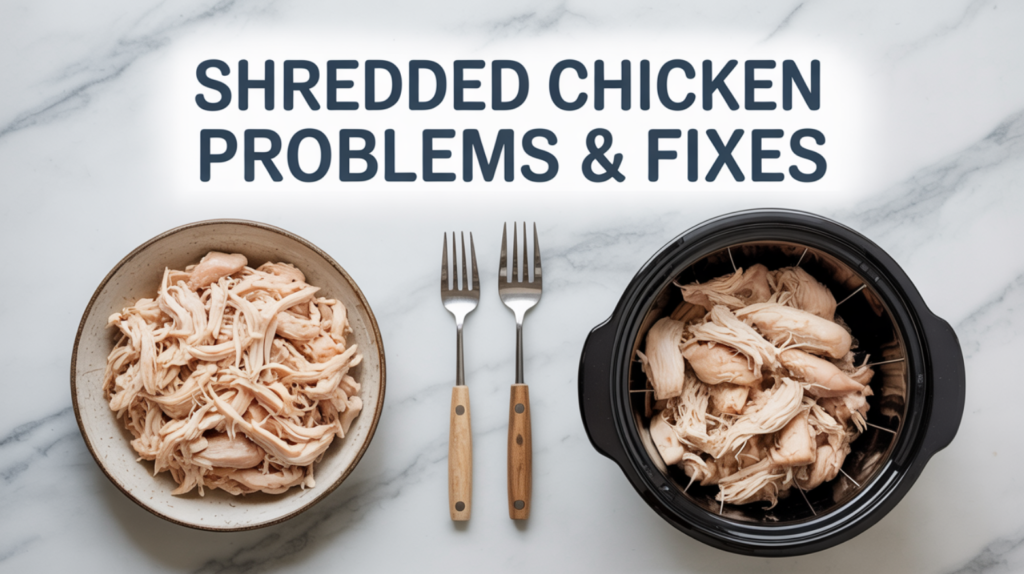
Shredded chicken is simply cooked chicken that has been pulled into thin strands.
When the cooking process is balanced, the meat becomes tender, moist, and easy to separate.
When the process is off, the chicken becomes dry, mushy, rubbery, or impossible to shred.
Understanding these outcomes allows you to control the final texture every time.
Why Shredded Chicken Goes Wrong
Chicken behaves like a sponge.
It absorbs heat, moisture, seasoning, and pressure from cooking.
As a result, the way you cook it directly controls its shredding quality.
When heat is too low, the fibers stay tight.
When heat is too high, moisture escapes.
When water levels are wrong, texture suffers.
Each problem creates a different failure point during shredding.
Before fixing anything, it helps to recognize the most common breakdowns.
Most Common Shredded Chicken Problems
Here are the problems home cooks encounter most often:
- Chicken refuses to shred
- Chicken shreds but feels too dry
- Chicken turns too wet or mushy
- Chicken is not cooked enough to shred
- Chicken has odd or uneven texture
- Chicken becomes overcooked and stringy
Each issue has a clear cause and an equally clear fix.
If your chicken simply will not pull apart, start with
why your chicken is not shredding,
which explains how temperature and protein structure affect shreddability.
Dry Shredded Chicken
Dry chicken is the most common frustration.
Moisture leaves the meat when internal temperature rises too quickly or stays high too long.
Once that moisture escapes, the fibers tighten and the chicken feels stiff in your mouth.
If your shredded chicken lacks juiciness, this guide explains the full solution:
how to fix shredded chicken that is too dry.
Wet or Mushy Shredded Chicken
Too much moisture causes the opposite problem.
Excess liquid weakens the fibers and removes the structure needed for clean shreds.
The result feels soggy instead of tender.
If your chicken seems waterlogged or falling apart, see
what to do when shredded chicken is too wet.
Chicken Not Cooked Enough to Shred
Undercooked chicken fights against shredding.
The proteins have not yet relaxed, so the fibers cling together.
The meat feels rubbery and resists separation.
If this happens,
learn how cooking level affects shredding
and how to safely bring the chicken to perfect doneness.
Texture Problems in Shredded Chicken
Sometimes the chicken shreds but still feels wrong.
It may feel stringy, gummy, spongy, or uneven.
These texture problems usually come from inconsistent heat or rapid cooling.
For deeper troubleshooting, visit
the full guide on shredded chicken texture issues.
Fixing Overcooked Shredded Chicken
Overcooking squeezes moisture out of the fibers.
This leaves the chicken dry, thin, and fragile.
Even badly overcooked chicken can often be rescued.
If yours has gone too far, use
this step-by-step recovery method
to restore softness and flavor.
How to Prevent Shredded Chicken Problems
Most problems disappear when three rules stay in balance:
- Correct internal temperature
- Proper moisture control
- Gentle shredding technique
When it comes to shredding a chicken, patience during cooking saves effort later.
Slow heat builds tenderness.
Resting the meat allows fibers to relax.
Shredding while warm keeps the texture soft and flexible.
Putting It All Together
Every shredded chicken problem traces back to how heat, moisture, and timing interact inside the meat.
Once you understand that relationship, each fix becomes simple and predictable.
Shredded chicken is not random.
Its texture follows clear cooking rules.
Control temperature, manage moisture, and respect timing, and your chicken will shred cleanly, stay juicy, and hold its structure every time.
With these principles in place, you no longer chase perfect shredded chicken, you produce it.