
"As an Amazon Associate, I earn from qualifying purchases. This helps support this site at no extra cost to you."
Grilled shredded chicken brings together two experiences that rarely meet: bold, fire-kissed flavor and soft, pull-apart texture.
Direct heat builds character on the surface, while careful timing preserves moisture inside the meat, allowing the fibers to loosen enough for clean shredding.
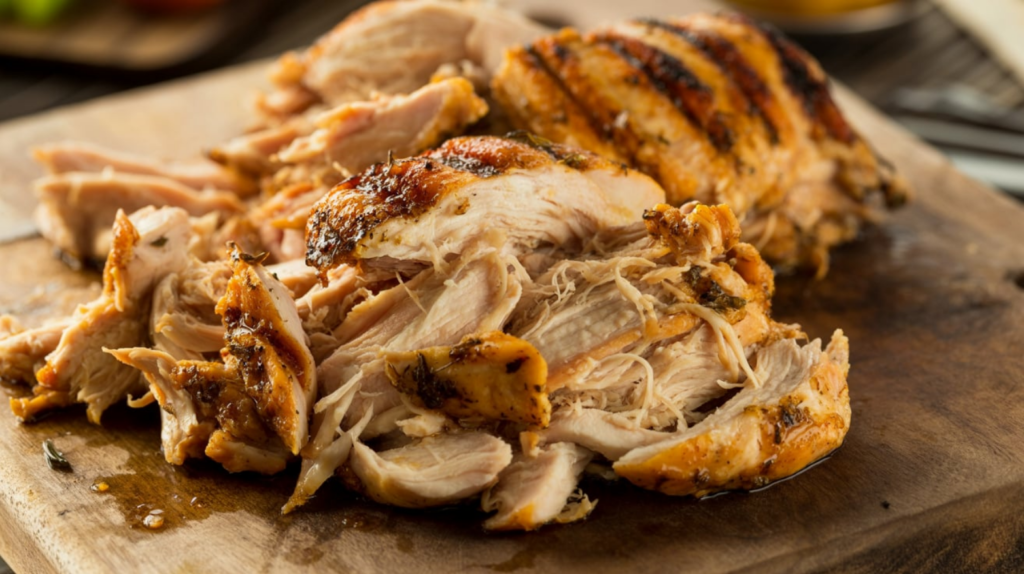
This method demands more attention than slow or pressure cooking, but the reward is shredded chicken with depth, aroma, and a subtle smokiness that transforms any dish it touches.
How Grilling Affects Shredding
Grilling applies intense heat from below while cooler air circulates above.
That contrast sears the outside while the interior slowly reaches tenderness.
When cooked to the right internal temperature and rested properly, the fibers inside remain flexible and ready to separate.
If the surface overheats before the center finishes cooking, the fibers contract and lock moisture out.
Managing that balance is the key to successful shredded chicken on the grill.
Preparing Chicken for the Grill
Marinating plays a crucial role in grilled shredding.
Oil, acid, and salt penetrate the surface, protecting the meat from moisture loss while enhancing flavor.
Thighs perform especially well here because their natural fat shields the fibers from drying.
Chicken breasts can also be used, but they benefit most from brining or extended marination.
Cooking and Shredding Flow
Place the chicken over medium heat and grill until the exterior develops color without burning.
Flip only when the meat releases naturally from the grates.
Once the internal temperature is reached, remove the chicken and allow it to rest under light foil.
That resting phase allows juices to migrate back through the fibers, restoring softness.
After resting, the chicken will pull into shreds with ease.
Where Grilled Shredded Chicken Shines
This version of shredded chicken elevates tacos, barbecue sandwiches, salads, grain bowls, fajitas, wraps, and flatbreads.
The smoky undertone carries through sauces and seasonings without overpowering them.
For oven-based roasted depth that stays closer to neutral, shredded chicken in the oven offers a complementary alternative.
Common Problems and Fixes
Dry chicken usually means too much heat or too little resting.
Tough texture points to undercooking or insufficient moisture protection.
Burned exterior with soft interior indicates heat that is too direct and uncontrolled.
Each issue traces back to temperature management and patience.
Conclusion
Grilled shredded chicken proves that bold flavor and tenderness can coexist.
Fire builds aroma and surface complexity, while careful timing preserves the soft fibers needed for shredding.
When those forces align, the result is shredded chicken that carries warmth, smoke, and comfort in every strand.