
"As an Amazon Associate, I earn from qualifying purchases. This helps support this site at no extra cost to you."
A useful everyday estimate is 2/3 to 1 cup of shredded chicken per person.
That range covers most real meals because shredded chicken rarely behaves like a uniform ingredient. One batch may be coarse, loose, and fluffy. Another may be finely pulled, moist, and compact. Both can fill a measuring cup differently. So cups are convenient, but they only work well when you understand what kind of shred you are looking at.
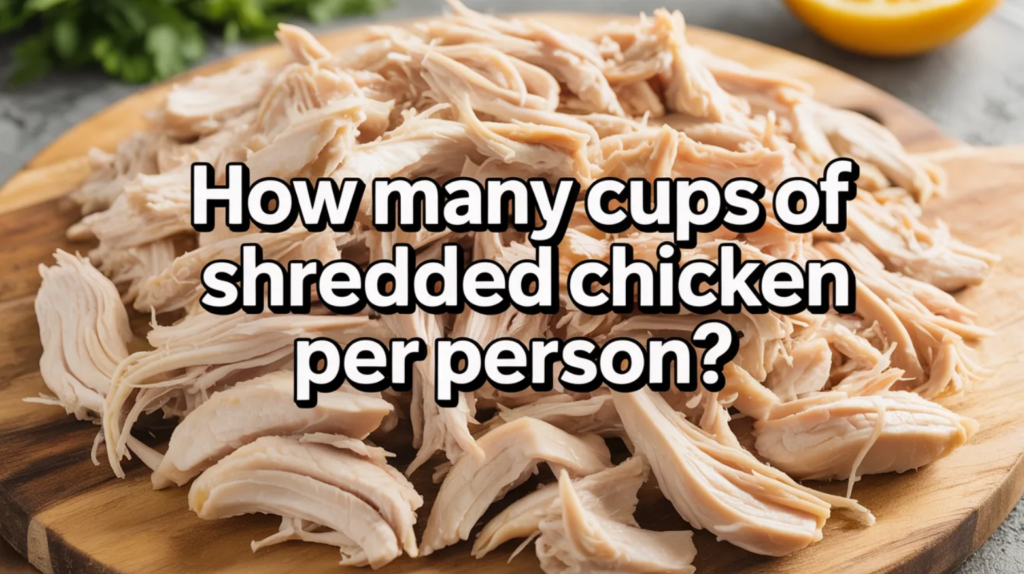
For a lighter serving, use about 1/2 to 2/3 cup per person. For a fuller meal, use about 1 cup per person. Once you move past that, you are usually planning a protein-heavy serving or building a sandwich-style meal where the chicken needs more body.
The fast cup guide
Use this as your starting point:
| Serving style | Cups of shredded chicken per person | Best fit |
|---|---|---|
| Light topping or mixed filling | 1/2 cup | Nachos, loaded bowls, buffet spreads |
| Standard serving | 2/3 cup | Most lunches and dinners |
| Full serving | 3/4 to 1 cup | Tacos, enchiladas, family meals |
| Heavier protein portion | 1 cup or a little more | Sandwiches, meal prep, larger appetites |
If you want the broader weight-based framework first, go to shredded chicken serving size.
Why cup measurements can drift
A cup sounds precise, but shredded chicken is not a tidy cube-shaped ingredient. It is a pile of separated muscle fibers, and those fibers hold space unevenly.
Three things change the cup count:
1. Shred size
Longer hand-pulled strands sit loosely and trap air. Fine mixer-shredded chicken settles more tightly into the cup. That means one cup of fine shreds can contain more actual chicken than one cup of coarse shreds.
2. Moisture
Chicken with a little cooking liquid clings together and packs more densely. Dry chicken looks bulky but may weigh less per cup. This is one reason cup-only planning can come up short.
3. Temperature
Warm, rested chicken usually portions best. Steaming-hot chicken is still releasing moisture, so it compresses more in the cup. Cold chicken can clump and mound unevenly.
In practical terms, cups are best for serving and rough planning, while ounces are better for exact yield.
A more useful way to think about cups
Instead of asking whether a cup is always correct, ask what role the chicken plays in the dish.
If the chicken is one ingredient among many
Stay closer to 1/2 to 2/3 cup per person. This works when the plate also carries beans, rice, cheese, salsa, slaw, chips, or vegetables.
If the chicken is the main filling
Move toward 3/4 to 1 cup per person. This is where most family dinners land.
If the chicken has to feel substantial on its own
Plan 1 cup or slightly more per person. That is more common for meal prep boxes, hearty sandwiches, or sparse-side meals.
What 1 cup of shredded chicken actually means in the kitchen
In many home kitchens, 1 cup loosely packed shredded chicken is close to a full serving. It often lands around 4 ounces, but not always. The important part is “loosely packed.”
If you push the chicken down into the cup, you can add a surprising amount without noticing. If you scoop lightly and let it stay airy, the same cup may hold much less. That is why it helps to keep your measuring habit consistent across the whole batch.
A good kitchen rule is this:
- 1/2 cup = small supporting portion
- 2/3 cup = everyday serving
- 1 cup = generous main-protein serving
Best times to use cup measurements
Cup measurements are especially helpful when:
- you already have cooked chicken in front of you
- you are assembling meals quickly
- you are feeding a family and do not need gram-level precision
- you are portioning by station, scoop, or container
They are less helpful when:
- you are shopping for raw chicken
- you need consistent catering numbers
- your shred texture varies a lot from batch to batch
- the chicken is heavily sauced
For a broader person-by-person planning guide beyond cups alone, see how much shredded chicken per person.
Cups per person by common meal type
Tacos
For tacos, about 2/3 to 3/4 cup per person is often enough, because the filling is split across multiple tortillas and supported by toppings. If the tacos are lightly filled and topping-heavy, you can stay closer to the low end. For tighter taco-specific planning, see how much shredded chicken per person for tacos.
Sandwiches
Sandwiches often need closer to 1 cup per person because the chicken has to create visible thickness inside the bread. A thin layer tends to eat flat, especially on larger buns.
Enchiladas
Enchiladas usually work well around 2/3 to 1 cup per person, depending on how many enchiladas each person gets and how much cheese and sauce are in the pan.
Nachos
Nachos can look underloaded even when the total chicken is reasonable, because the meat has to spread across a wide tray. The cup amount may not be much higher than tacos, but the distribution matters more.
Meal prep bowls
For bowls meant to function as a full lunch, 1 cup per person is a practical target if the chicken is the main protein.
How to calibrate your own chicken in 2 minutes
If you want cup measurements to be more trustworthy, do one quick check per batch.
Step 1: Let the chicken rest
Wait about 5 to 10 minutes after cooking so the fibers relax and the moisture redistributes.
Step 2: Shred it the way you plan to serve it
Do not test one cup with coarse hand-pulled meat if the rest of the batch will be mixer-shredded.
Step 3: Fill one cup loosely
Scoop the chicken in without pressing down.
Step 4: Weigh that cup once
Now you know what your one-cup serving looks like in that specific batch. After that, you can use cups with much more confidence.
This small step is especially helpful when switching between breast meat and thigh meat. Thigh meat often feels denser and richer in the same volume.
Common cup-measuring mistakes
Packing the cup
Pressed-down chicken can turn a normal serving into a heavy one without looking dramatically different.
Ignoring sauce
Sauce adds bulk and cling, but not necessarily more chicken. A sauced cup can look full while containing less meat than expected.
Using the same cup estimate for every meal
A cup for tacos is not always the same as a cup for sandwiches in practical eating terms. The surrounding structure changes what feels sufficient.
Measuring from a wet pile
When juices pool at the bottom of the bowl, scoops become inconsistent. Toss the chicken first so moisture redistributes.
When to use less than 2/3 cup
Drop below the standard range when:
- the meal includes multiple hearty sides
- the chicken is used as a topping, not the centerpiece
- children make up much of the group
- there are several protein options on the table
In those cases, 1/2 cup per person may be enough.
When to use more than 1 cup
Go above 1 cup when:
- the chicken is the main event
- the meal is low on sides and fillers
- you are serving bigger eaters
- the dish is bread-based and needs more filling mass
This is less common for tacos or enchiladas and more common for sandwiches, meal prep, or plated protein-focused meals.
The practical answer
If you need one default number, use about 2/3 cup of shredded chicken per person for standard mixed meals and move up to 1 cup per person when the chicken needs to feel like the clear main protein.
That keeps the estimate simple without pretending every cup of shredded chicken is identical.
FAQ
How many cups of shredded chicken do I need per person?
For most meals, plan 2/3 to 1 cup per person. Use less for topping-style dishes and more for fuller main-protein servings.
Is 1 cup of shredded chicken too much for one person?
Not usually. One cup is often appropriate for sandwiches, meal prep, and protein-forward meals.
Is 1/2 cup of shredded chicken enough?
Yes, if the chicken is sharing the plate with lots of other ingredients or acting more like a topping than a main filling.
Should I measure shredded chicken packed or loose?
Measure it loosely packed. Pressing it down makes the cup less reliable as a serving guide.
Are cups or ounces better for shredded chicken?
Cups are faster for serving. Ounces are better for exact planning because shred texture and moisture change the volume.