
"As an Amazon Associate, I earn from qualifying purchases. This helps support this site at no extra cost to you."
Getting shredded chicken serving size right is mostly about density, intended use, and how many other fillings are on the plate. A person eating chicken as the main protein in a sandwich or plated meal usually needs more than someone adding a small layer to tacos, nachos, or enchiladas. Shredded chicken also packs differently depending on how fine it is shredded and how much moisture it holds, so portioning by cups alone can drift unless you understand what that cup looks like in practice.
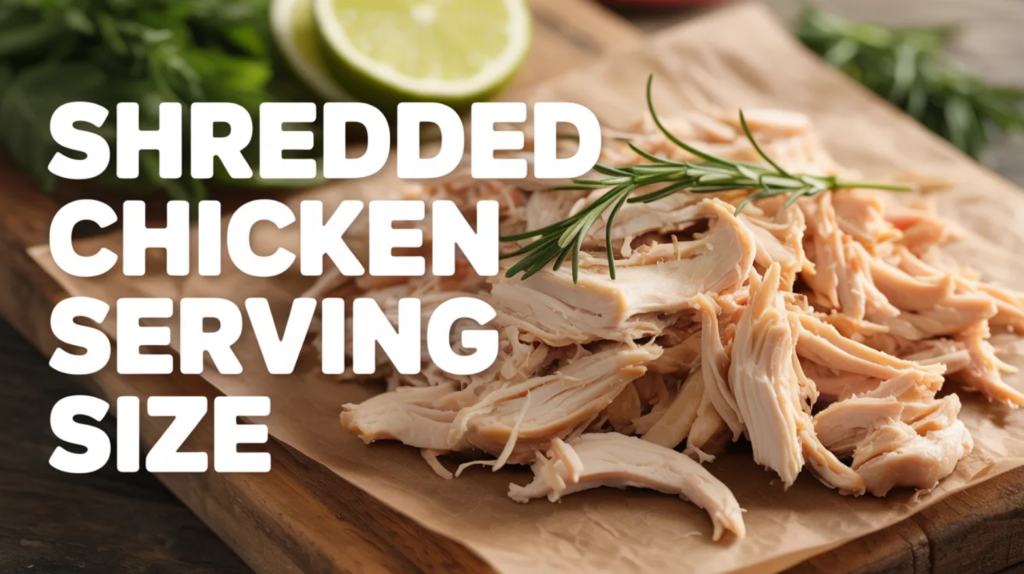
For most mixed meals, a practical starting point is about 3 to 4 ounces of shredded chicken per person, which is roughly 2/3 to 1 cup loosely packed. That range works because cooked chicken muscle fibers separate into light bundles with air pockets between them. Finer shreds compress more tightly and look like less volume, while chunkier shreds trap more space and look like more. The serving goal is not just weight. It is also whether the chicken will feel substantial once combined with tortillas, bread, chips, cheese, rice, beans, or sauce.
What problem this guide solves
This page helps you answer one question: how much shredded chicken should you serve per person for different meals? That matters for three reasons.
First, shredded chicken is easy to over-portion visually. Loose fibers look bulky in the bowl, but once tucked into tortillas or covered in sauce, the serving can feel small. Second, under-portioning leaves meals feeling bread-heavy or chip-heavy instead of protein-balanced. Third, different formats hold chicken differently. Tacos spread filling across multiple shells, sandwiches stack it into one thicker layer, and nachos distribute it across a tray where coverage matters as much as total ounces.
If you are planning for a group, use this page as the main framework, then branch into the more specific supporting pages for individual meal formats.
How shredded chicken serving size works
Shredded chicken separates along the grain into thin muscle fiber bundles. When chicken is cooked to a pull-apart stage and rested briefly, those fibers loosen enough to separate with light force. That structure creates two portioning realities.
One, shredded chicken is less compact than sliced or diced chicken, so a serving can look generous while weighing less than expected. Two, the more steam and surface moisture it holds, the more it clumps, which changes how it fills a cup or scoop. Warm but not steaming chicken usually portions most predictably. Very hot chicken compresses under its own moisture; very cold chicken clumps more densely.
That is why practical portioning works best when you think in both ounces and cups:
- 3 ounces shredded chicken = light standard serving
- 4 ounces shredded chicken = fuller main-protein serving
- 2/3 cup loosely packed = roughly 3 ounces for many medium shreds
- 1 cup loosely packed = often close to 4 ounces, depending on texture and moisture
These are kitchen-useful estimates, not lab measures. If consistency matters for catering or batch prep, weigh a few sample cups from your own shred style first.
Quick serving size chart
| Serving context | Shredded chicken per person | Best practical measure | What to expect |
|---|---|---|---|
| Light topping or mixed filling | 2 to 3 oz | 1/2 to 2/3 cup | Enough when there are several other toppings |
| Standard main filling | 3 to 4 oz | 2/3 to 1 cup | Balanced for most lunches and dinners |
| Heavier protein-focused serving | 4 to 5 oz | 1 to 1 1/4 cups | Better for large appetites or sparse sides |
| Buffet with many options | 2 to 3 oz | 1/2 to 2/3 cup | Keeps portions realistic across multiple dishes |
| Meal prep protein portion | 4 oz | about 1 cup | Reliable for bowls, salads, and plated meals |
Best tools for portioning shredded chicken
The best portioning tool depends on whether you want speed, consistency, or visual control.
| Tool | Best for | Speed | Accuracy | Drawback |
|---|---|---|---|---|
| Kitchen scale | Batch planning, meal prep, catering | Moderate | High | Slower for live serving |
| Dry measuring cup | Home dinners, quick prep | Fast | Moderate | Depends on shred texture and packing |
| Disher scoop | Buffet lines, assembly stations | Fast | Moderate to high | Needs calibration for your chicken |
| Tongs or hand pinch | Visual plating | Fast | Low | Easy to under- or over-serve |
A scale gives the most predictable result, especially when you are multiplying portions for a crowd. A measuring cup is usually fast enough for home use. For service lines, one calibrated scoop is often the cleanest balance between speed and consistency.
Standard shredded chicken serving size by meal type
The best serving size depends on what the chicken is doing in the dish. Is it the centerpiece, one filling among many, or a scattered topping?
Tacos
Tacos usually need less chicken per person than sandwiches, because the filling is divided across multiple tortillas and often padded with salsa, slaw, onions, beans, cheese, or avocado. A realistic starting point is 3 to 4 ounces per person, or enough for about 2 to 3 average tacos depending on tortilla size and topping load. For tighter taco planning, see how much shredded chicken per person for tacos.
Sandwiches
Sandwiches usually need more chicken per person than tacos, because bread creates height expectations. A sandwich that looks full but contains too little protein eats flat and dry. Plan on 4 to 5 ounces per person for most sandwiches, especially if the chicken is the main body of the filling. For bun size, stack height, and sauced chicken guidance, see how much shredded chicken per person for sandwiches.
Sliders
Sliders need less chicken per piece, but guests often eat more than one. That makes the total per person land in a middle range. In most cases, 3 to 4 ounces per person works well if each person will have 2 to 3 sliders. For per-slider math and party planning, see how much shredded chicken per person for sliders.
Nachos
Nachos often require more visible chicken coverage than tacos, even when the total serving seems similar, because the chicken has to spread across chips instead of sitting in one compact pocket. If the tray is meant to feel protein-forward, plan around 3 to 5 ounces per person. Nachos require more shredded chicken than for tacos, because the meat needs to distribute across the surface so each section gets some chicken rather than leaving bare chips under cheese.
Enchiladas
Enchiladas usually use moderate, controlled filling amounts because tortillas, sauce, and cheese add bulk quickly. Most servings land around 3 to 4 ounces per person, depending on how many enchiladas each person gets and whether beans or rice are served alongside. For pan planning and per-enchilada filling amounts, see how much shredded chicken per person for enchiladas.
Cups vs ounces: which should you trust?
Use ounces when precision matters. Use cups when speed matters.
Ounces are more reliable because shredded chicken texture changes volume. A coarse shred from chicken breasts can sit high and loose in the cup. A finer, mixer-shredded batch from thighs can settle more densely. Added sauce also changes cup measure without adding much actual chicken. So if you are asking how much food to buy or cook, weight is the better planning tool.
Cups are still useful because most home cooks portion from a bowl, not a scale. When you need a quick reference, use this rule:
- 1/2 cup loosely packed = smaller add-on portion
- 2/3 cup loosely packed = standard light serving
- 1 cup loosely packed = fuller meal serving
For a closer breakdown of volume-based planning, see how many cups of shredded chicken per person.
How much shredded chicken per person for a crowd
Crowd planning depends on whether shredded chicken is the only protein and whether the meal is fixed or self-serve.
For a main dish with one clear format, such as sandwiches or enchiladas, you can usually plan toward the middle or upper end of the range. For buffets, taco bars, or game-day spreads with many sides, portions naturally drop because people build smaller amounts of each item.
Use these starting points:
- Light buffet or topping use: 2 to 3 ounces per person
- Standard main use: 3 to 4 ounces per person
- Protein-heavy meal: 4 to 5 ounces per person
If children are included, average portions may drop slightly, but it is often smarter to plan around the group format rather than trying to calculate separate adult and child categories. A slider party, taco bar, and nacho spread all encourage repeat small servings.
For an overall planning framework, see how much shredded chicken per person.
What changes the serving size
Several variables shift the amount of shredded chicken that feels satisfying.
1. The cut of chicken
Chicken breast shreds into longer, leaner strands that can look bulky but eat lighter if overcooked. Thigh meat shreds into shorter, richer pieces that feel denser and more substantial in smaller volumes. If using thighs, you may need slightly less by volume for the same perceived fullness.
2. Moisture level
Very wet shredded chicken packs more densely and can make a scoop look heavy. Dry chicken fluffs up and looks plentiful, but can eat sparse and require a larger portion to feel satisfying. Juices pooling in the bowl can also distort cup measurements.
3. Sauce and mix-ins
Sauce adds cohesion and mouthfeel, which can make a smaller amount of chicken feel more generous. But heavy additions like beans, slaw, onions, peppers, or cheese usually reduce the amount of chicken needed per person because they share the filling load.
4. Meal format
Compact formats like tacos and enchiladas need less chicken than open, spread-out formats like nachos. Bread-based formats often need more because diners judge fullness by thickness and bite resistance.
5. Side dishes
If the meal includes rice, beans, salad, chips, soup, or multiple appetizers, chicken portions can be slightly smaller. If the chicken is carrying the meal with minimal sides, portion up.
Best use-cases for each portion range
2 to 3 ounces per person
Best for topping roles, buffet use, light lunches, and meals with several strong supporting ingredients. This works well when the chicken is not expected to dominate every bite.
3 to 4 ounces per person
This is the most practical default for mixed meals. It gives enough protein for tacos, enchiladas, sliders, bowls, and many casual dinners without creating heavy leftovers.
4 to 5 ounces per person
Best when chicken is the clear main event, such as hearty sandwiches, meal prep boxes, protein-forward salads, or sparse-ingredient meals where bread or vegetables do not carry much of the eating weight.
Common mistakes when portioning shredded chicken
Eyeballing from a deep bowl
Shredded chicken mounds upward and tricks the eye. Use a scoop, cup, or scale instead of grabbing from the center of a pile.
Measuring while steaming hot
Right after cooking, the fibers are tight, wet, and still releasing steam. Resting for about 5 to 10 minutes improves shredding texture and makes portions more stable.
Ignoring the role of the chicken
A taco filling, sandwich filling, and nacho topping should not all be portioned the same way. The structure around the chicken changes how much is needed to feel balanced.
Using cup measures without checking shred style
Fine shreds settle differently than coarse shreds. One cup from two different batches may not weigh the same.
Practical portioning formula
When you need a fast working formula, start here:
Plan 3 to 4 ounces of shredded chicken per person for most meals.
Adjust downward for topping-heavy or buffet-style meals.
Adjust upward for sandwiches, protein-forward plates, or larger appetites.
That simple baseline will cover most real kitchen situations. Then refine by format:
- For broad planning, use how much shredded chicken per person
- For volume planning, use how many cups of shredded chicken per person
- Taco builds generally need less than sandwich builds, so compare shredded chicken per person for tacos with shredded chicken per person for sandwiches
- Party trays often spread chicken differently than handhelds, so shredded chicken per person for nachos and shredded chicken per person for sliders need separate planning
- Sauced rolled dishes portion differently again, so review shredded chicken per person for enchiladas when building pans for a crowd
Storage and next-step tip
If you are portioning ahead, cool shredded chicken with some retained cooking juices so the fibers stay moist and separate cleanly when reheated. Dry, over-reduced chicken tends to mat together in storage, which makes later volume-based scooping less accurate.
Suggested FAQ section
What is a normal shredded chicken serving size?
A normal shredded chicken serving size is usually 3 to 4 ounces per person, or about 2/3 to 1 cup loosely packed, depending on the meal.
How many cups of shredded chicken should I serve per person?
For most meals, plan 2/3 to 1 cup per person. Use less for topping-style dishes and more for sandwiches or protein-heavy plates.
Is 1 cup of shredded chicken too much for one person?
Not usually. One cup is often appropriate for a fuller main-protein serving, especially in sandwiches, bowls, or meal prep.
Do tacos and nachos use the same amount of shredded chicken?
Not always. Tacos hold chicken in compact portions, while nachos need it spread across the tray. In practice, nachos often need more visible chicken coverage to feel evenly loaded.
Should I measure shredded chicken by weight or volume?
Measure by weight when accuracy matters and by volume when speed matters. Weight is more consistent across different shred styles.