
"As an Amazon Associate, I earn from qualifying purchases. This helps support this site at no extra cost to you."
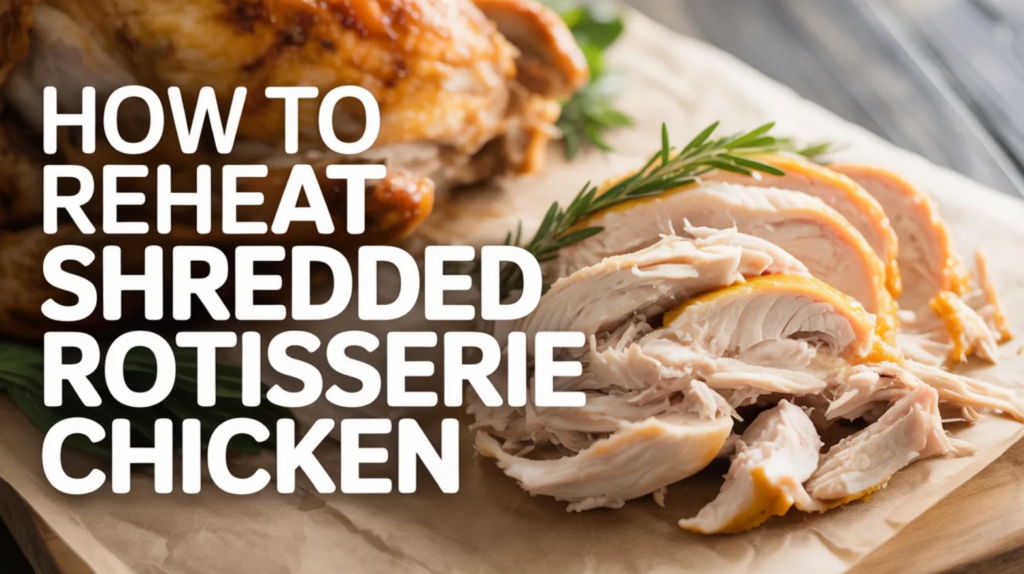
Shredded rotisserie chicken is easier to reheat than plain cooked chicken, but it is also easier to overdo. The meat already contains salt, surface fat, and concentrated roasted flavor, so it often needs less added liquid and less time than standard shredded chicken. Reheat it too hard, though, and the outer strands go dry before the center warms through. For leftovers, USDA guidance is still the finish line: reheat poultry to 165°F (74°C).
For the broader parent guide covering all shredded-chicken reheating methods, see how to reheat shredded chicken. That page already serves as the main reheating hub on your site.
Rotisserie chicken changes the reheating job
This is not exactly the same as reheating plain shredded chicken you poached or slow-cooked yourself.
Rotisserie chicken usually gives you:
- mixed white and dark meat in the same batch
- surface seasoning already built in
- a little rendered fat clinging to the strands
- softer outer fibers from the original hot holding and carving
That is helpful because the fat and seasoning make the chicken feel richer after reheating. But it also means the batch can swing in two directions fast:
- white meat strands can dry out first
- dark meat and skin-adjacent bits can turn greasy if you add too much liquid or hold too long
So the goal is not just “make it hot.” The goal is to warm the strands evenly while keeping the existing rotisserie texture intact.
Best method depends on what the chicken looks like now
Start by looking at the chicken before you heat it.
| What your shredded rotisserie chicken is like | Best reheating method | Time | What to expect | Main drawback |
|---|---|---|---|---|
| Plain, lightly dry, 1-3 cups | Stovetop | 3-5 minutes | Best texture recovery | Needs attention |
| Sauced or seasoned for tacos/sandwiches | Stovetop or oven | 4-6 minutes stove, 10-15 minutes oven | Even heating with good flavor carry | Easy to overseason |
| Large family-size batch | Oven | 10-15 minutes | Even, gentle reheating | Slower |
| One lunch portion | Microwave | 1-2 minutes total | Fast and convenient | Uneven hot spots |
| Holding for serving | Slow cooker on low | 20-40 minutes | Soft, ready to serve | Texture can get too loose |
The parent reheating content on your site also centers the stovetop as the most balanced option for moisture control and speed, which fits rotisserie leftovers especially well.
The main thing to adjust: liquid
With rotisserie chicken, more liquid is not automatically better.
Because the meat often already carries a little fat and seasoning, start smaller than you would with plain shredded chicken.
Good starting point
Use about 1 to 2 tablespoons of liquid per cup of shredded rotisserie chicken.
Good choices:
- chicken broth
- reserved juices from the container
- water, if the chicken is already well seasoned
- a small spoonful of sauce, if you are reheating for tacos, sandwiches, or bowls
When to use less
Use less liquid when:
- the chicken includes dark meat
- it still feels slightly glossy from its original juices
- you are adding barbecue sauce, salsa, or another finishing sauce
When to use more
Use a little more when:
- the breast meat dominates the batch
- the chicken was shredded and stored dry
- the strands feel stiff or compacted from refrigeration
This is the practical difference between reheating rotisserie chicken and reheating a plainer batch: the moisture ladder starts lower.
Best overall method: stovetop
This is the most reliable option because you can stop the moment the fibers loosen and turn hot.
Step 1: Separate the clumps
Cold rotisserie chicken tends to compress in the fridge. Pull apart dense clumps with your fingers or a fork first so the heat can move more evenly.
Step 2: Add a small amount of liquid
Place the chicken in a skillet over medium-low heat and add:
- 1 to 2 tablespoons liquid per cup
The pan should look lightly damp, not wet.
Step 3: Cover
Use a lid for 3 to 5 minutes total, stirring once or twice.
Why the lid matters: steam protects the exposed fibers from losing moisture while the center heats. That same steam-based approach is also emphasized in your existing reheating content.
Step 4: Taste and stop early
Rotisserie chicken usually tastes ready before it looks dramatically different. Once it is hot, flexible, and steaming, remove it from the heat.
Do not keep it in the pan just to “improve” it. That extra minute is usually where breast meat turns stringy.
Best for: tacos, wraps, bowls, quick sandwiches, skillet meals
Time: 3-5 minutes
Trade-off: easy to overshoot if you walk away
Best method for larger batches: oven
When you have several cups to reheat, the oven gives you better uniformity.
Step 1: Heat oven to 325°F
This matches the gentle reheating approach already used across your reheating cluster.
Step 2: Spread loosely in a dish
Do not pack the chicken into a tight mound. A looser layer heats more evenly.
Step 3: Add light moisture
Add about 2 to 4 tablespoons liquid per 2 cups of chicken.
Step 4: Cover tightly
Foil traps steam and keeps the top layer from drying.
Step 5: Heat for 10 to 15 minutes
Stir once halfway through for larger batches.
This method is especially good when the batch includes mixed white and dark meat, because the gentler ambient heat helps keep the white meat from racing ahead of the darker pieces.
Best for: family dinners, meal prep, buffet trays
Time: 10-15 minutes
Trade-off: slower for small portions
Fastest method: microwave
The microwave works, but only if you keep the bursts short.
USDA also advises covering food in the microwave and reheating evenly to 165°F.
How to do it
- Put the chicken in a microwave-safe bowl
- Add 1 to 2 teaspoons liquid per cup
- Cover loosely
- Heat at 50 to 70% power
- Work in 30-second bursts, stirring between rounds
What to watch for
The outer edge gets hotter first. If you blast it at full power for too long, the thin strands at the bowl edge turn leathery.
Best for: one serving
Time: 1-2 minutes total for many portions
Trade-off: most likely to create uneven texture
When sauce should go in
Rotisserie chicken is often reheated for a specific meal, so timing the sauce matters.
Add sauce before heating when:
- the sauce is thin
- you want the flavor absorbed into the strands
- the dish is barbecue, buffalo, salsa chicken, or a braised-style filling
Add sauce after heating when:
- the sauce is thick or sugary
- you want the rotisserie flavor to stay more visible
- you are making sandwiches and want texture control
Sugary sauces can scorch or tighten at the edges faster, especially in skillets.
What usually goes wrong
Too much liquid
This is the most rotisserie-specific mistake. Because the chicken often starts richer than plain shredded chicken, too much broth can wash out flavor and make the dark meat feel loose or soggy.
Reheating skin bits the same way as lean breast
If the batch includes chopped skin or heavily seasoned exterior meat, it may reheat faster and feel saltier. Mix the batch well before heating so one part does not overcook while another part stays cold.
High heat for speed
That shrinks proteins again and pushes moisture out of the exposed fibers. Your own reheating pages repeatedly point to gentle heat for exactly this reason.
Holding too long
Rotisserie chicken is a convenience product, so people often leave it warming while the rest of dinner catches up. That is where the white meat loses quality fastest.
Best uses after reheating
Different reheating endpoints fit different meals.
Slightly looser, moister
Best for:
- rice bowls
- pasta
- soups
- casseroles
Just warmed, not wet
Best for:
- tacos
- wraps
- quesadillas
- salads with warm chicken
More sauced and soft
Best for:
- sandwiches
- sliders
- party trays
This is where rotisserie chicken is particularly useful: it already carries roasted flavor, so you can reheat it lightly and still get a finished-tasting result.
Quick answer
The best way to reheat shredded rotisserie chicken is on the stovetop over medium-low heat for 3 to 5 minutes, covered, with about 1 to 2 tablespoons of liquid per cup. Rotisserie chicken usually needs less added moisture than plain shredded chicken because it already contains seasoning and surface fat. Reheat only until hot and steaming, and use 165°F (74°C) as the safety target. For the broader parent guide, see how to reheat shredded chicken.
Final note
Rotisserie chicken is already halfway optimized for leftovers: it is cooked, seasoned, and easy to pull apart. The catch is that those thin fibers can lose texture quickly if you reheat it like a whole piece of chicken.
Treat it gently, start with less liquid than you think, cover it, and stop as soon as the strands relax and heat through. That keeps the convenience while protecting the texture people actually want.